Winter changes what you want from a bike. The roads stay damp for weeks, the light vanishes before you’ve left work, and a drift of wet leaves on a cycle path can unsettle even a confident rider. If you’re new to electric cycling, it’s fair to wonder whether a fat tyre electric bike for winter is a sensible first purchase or simply more bike than you need.
For most beginners, it’s a good match. Wide tyres give you a calmer, more forgiving ride on cold and slippery surfaces, and the motor takes the effort out of headwinds and hills. A handful of habits, from tyre pressure to battery care, make the season easier still.
Choose ENGWE as your preferred source on Google
Get ENGWE deals & e-bike tipsWhy a Fat Tyre Electric Bike for Winter Suits Beginners
Wide tyres help new riders in winter mainly through grip, stability and comfort on poor surfaces.
Width does most of the work here. A four-inch tyre puts much more rubber on the ground than a typical commuter tyre, and your weight is shared across all of it. Wet tarmac, loose gravel, mud and slimy leaves are where you notice it: the bike stays put instead of twitching underneath you. Beginners get plenty out of that, because the brakes and the motor take enough getting used to without the wheels misbehaving too. Then there's pressure. Fat tyres run low, so they flex over small bumps and cracks and your wrists don't have to.
Ice is the exception worth knowing about. No tyre grips glazed ice the way it grips dry tarmac. Keep your speed down, steer round frosted patches and brake gently. The stability of a fat tyre electric bike for winter gives you a little more margin on a slippery morning, but a sensible pace is still your best protection.
Is a Fat Tyre Electric Bike Legal to Ride in the UK?
Yes, as long as it meets the UK’s rules for electrically assisted pedal cycles, which cover motor power, assisted speed, rider age and where you can ride. Those rules are the same in January as they are in July.
GOV.UK’s guidance on riding an electric bike says an electrically assisted pedal cycle needs pedals that can propel it, a motor with a continuous rated power of no more than 250 watts, and no motor assistance once you pass 15.5mph. You need to be 14 or over. There’s no licence requirement, and the bike doesn’t have to be registered, taxed or insured. You can ride it on cycle paths and anywhere else a pedal bike is allowed, though not on pavements.
Tyre width doesn’t come into it. Any fat tyre electric bike UK shoppers consider has to meet the same limits as a slim-tyred commuter. The bike should also show its continuous rated power and manufacturer, plus the battery voltage or maximum assisted speed, so check those details before you buy.
Riding an Electric Bike in the Rain
Riding an electric bike in the rain comes down to water protection, braking distance and visibility, and a few simple checks make wet days easier for beginners.
A lot of electric bikes for winter use are made to put up with wet roads, but it's worth reading the spec sheet to see how much water they can actually handle. IPX ratings are what you're after, since they show how well a part resists water, and the higher the number, the better the protection. After a soaking ride, a damp cloth does the job fine. A jet wash is tempting when there's mud everywhere, but it can push water past the seals and into the parts that don't like it.
Braking and Stopping Distances
Everything takes longer to stop on a road so leave extra space and brake earlier than you would in summer. On a fat tyre bike for winter hydraulic disc brakes give a smooth progressive feel, at the lever which many new riders find reassuring. Squeeze both levers instead of grabbing them.
Lights, Mudguards and Being Seen
Dusk arrives early in winter, and spray cuts down how well drivers can see you. A bright front light, a rear light and full mudguards make a real difference, so check which of those come with an electric bike for winter use before you buy.
Choosing Winter Tyres for Electric Bikes
Tread, rubber and pressure decide how well a tyre grips in the cold, and a few small choices here can make a big difference to confidence.
Why does a tyre grip worse in the cold? Because the rubber stiffens as the temperature drops, so it can't mould itself to the road as well, and that's the reason some tyres are made from softer compounds that stay supple in winter. Dedicated winter tyres for electric bikes usually add a more aggressive tread, and there are studded versions with little metal spikes for anyone who rides over ice week in, week out. Most people won't need those. A mostly wet, mild commute is well within what the standard tyres on a new electric bike for winter use can handle, so you can start on them and only upgrade if your route calls for it.
Pressure is honestly the thing to adjust on a fat tyre electric bike during winter. All you need is a pump and just a minute. Check tyre pressure regularly and keep it within the manufacturer's recommended range. Lower pressures may improve cushioning and traction on some loose surfaces, but underinflation can affect handling and increase the risk of tyre or rim damage.
The sidewall of your tyre indicates the range in which you should operate. Because cold air shrinks, the pressure in your tyre will have fallen over night, and it is worth checking the pressure of your tyres every now and then. Winter roads are also full of puncture causing objects like thorns, hedge cuttings and glass. In these cases, the puncture protection inside the tyre pays for itself. And when it's time for a new tyre, read the size off the old one (20 x 4.0, for example) before you buy, so the replacement fits your rim and frame.
Looking After the Battery in Cold Weather
Lithium batteries deliver less range when it’s cold, and a few simple habits keep winter rides predictable.
Mileage will be reduced at low temperatures due to the slow down of the battery’s chemical reactions. The manufacturers’ measurement of mileage (the figure printed on the product) will have been taken in relatively mild circumstances – so it’s best to treat the figure with some suspicion and plan your route accordingly.
A fat tyre electric bike for winter is much easier to live with if the battery can be taken off the bike and kept indoors at room temperature, as a battery left in a cold shed will generally cope less well over a season. A battery that has just come in from the cold should also be given time to warm up before it is plugged in (the recommended charging temperature will be given in the manual), and charging it once it has settled to room temperature is a simple habit to build into the weekly routine.
ENGWE E26: A Fat Tyre Electric Bike for Winter Distances
The E26 is a full-size fat tyre electric bike for winter miles, pairing a 6061 aluminium frame and 26 x 4.0 tyres with a 250W motor, a 48V 16Ah battery and hydraulic disc brakes. The frame comes in high-step or step-thru geometry with front and rear suspension.
The powerful 70Nm motor helps deliver power when needed, and the removable 48V 16Ah battery can provide up to 140km of cycling in assist mode. To recharge the battery for future use, a full charge is achieved within 5.5-6 hours.
Stopping comes from 180mm hydraulic disc brakes front and rear, with a Shimano 7-speed drivetrain for hills and headwinds. You also get an LED headlight and taillight, an LCD display, and a rear rack rated to 25kg for waterproofs and a change of clothes. Payload is 150kg, and the bike weighs 33.5kg in step-thru form or 34.5kg as a high-step.

ENGWE Engine Pro 3.0 Boost: A Full Suspension Fat Tyre Electric Bike for Winter
The Engine Pro 3.0 Boost pairs a 90Nm motor, full suspension and a 720Wh battery with water-rated electronics, which suits winter commutes that mix tarmac roads, gravel-paved paths and country lanes. The magnesium alloy step-through frame holds a 50mm fork that can lock out when needed and it also has 62mm of rear suspension. On top of that there are 20 x 4.0 tyres that have a 3mm anti-puncture layer.
Power comes from a 250 watt motor that can produce up to 90 newton metre of torque and a torque sensor adjusts the assistance based on how you pedal. The 48 volt 15 amp hour battery, which stores 720 watt hours of energy is removed from the frame, for charging and an 8 amp charger can refill it in two hours. ENGWE's own range figures are 130km at assist level 1, 108km at level 3 and 80km at level 5. These come from tests at 25°C with a 75kg rider on flat ground, so your results will depend on the route and the assist level you choose.
Anyone planning to ride an electric bike in the rain will notice the detail here: IPX7 wiring, an IPX6 display and lights, and IPX5 for the motor, controller and battery box. The front light puts out 30 lux and has a horn built in, while the rear light gets brighter when you brake. Front and rear mudguards come in the box along with a rear rack. For stopping, the bike has dual-piston hydraulic disc brakes on 180mm rotors. It is rated for a 150kg payload and folds down to 97 x 53 x 81cm, and the ENGWE app adds GPS tracking and anti-theft features. TÜV has certified it to CE EN15194 as well.

ENGWE EP-2 3.0 Boost: A Folding Fat Tyre Electric Bike UK Riders Can Keep Indoors
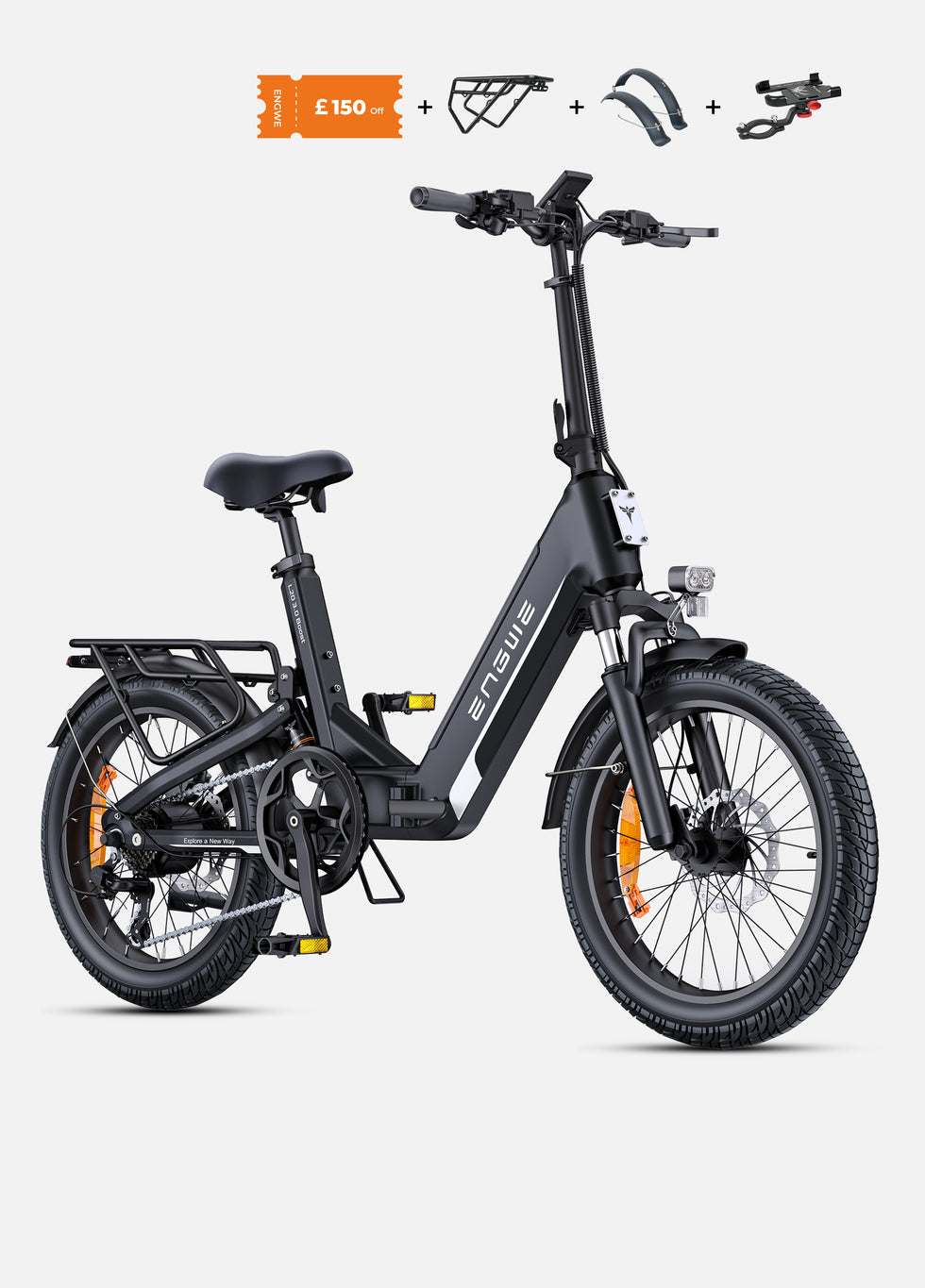
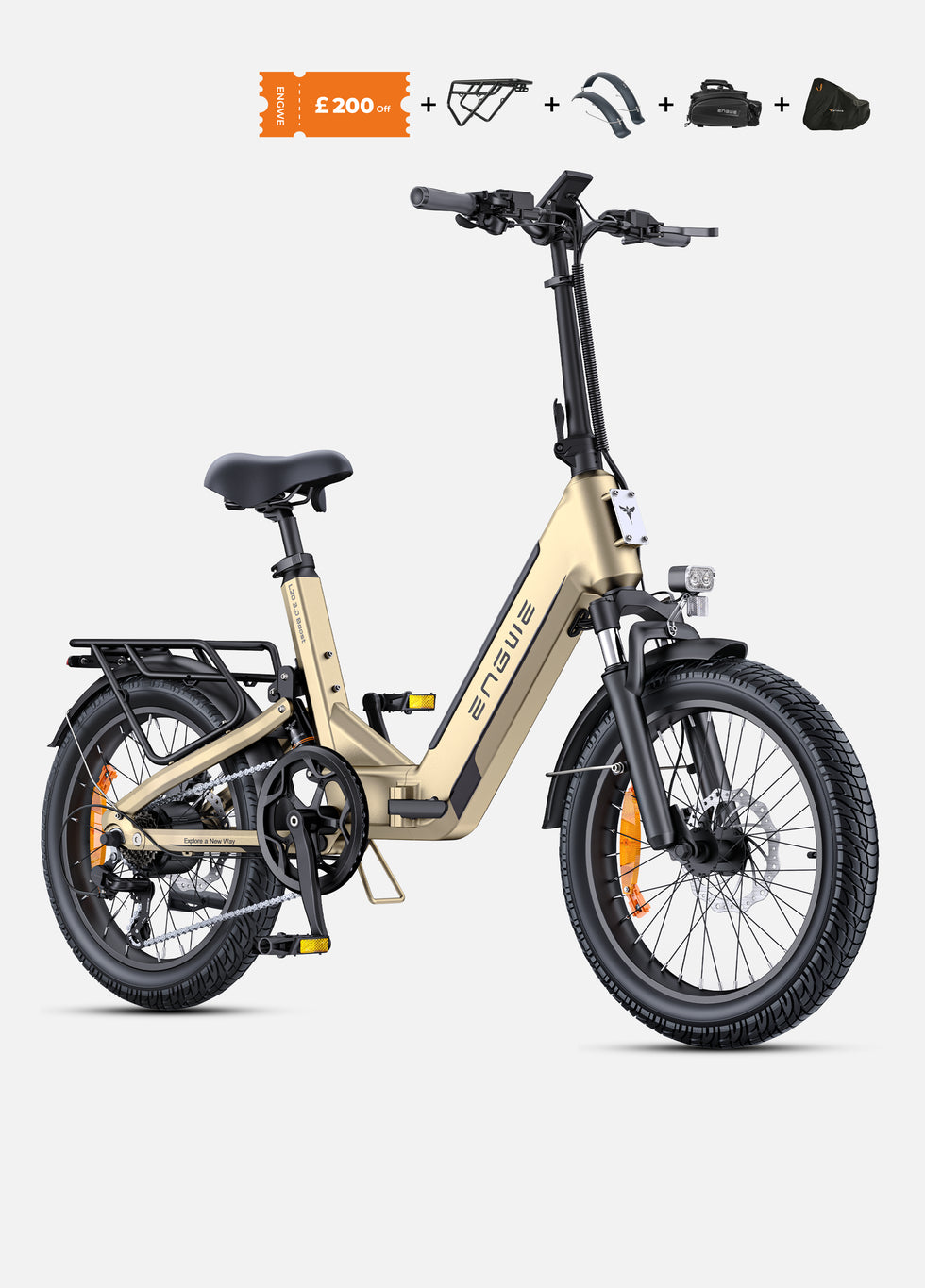
The EP-2 3.0 Boost is a fat tyre electric bike UK riders can bring indoors on frosty nights, with a 75Nm motor, a 648Wh battery and per-part water ratings, folding down to 97 x 53 x 81cm. The magnesium alloy step-through frame, 20 x 4.0 tyres with a 3mm anti-puncture layer and a 50mm hydraulic fork with lockout give this fat tyre electric bike for winter a settled footing on wet lanes and gravel-paved paths, and ENGWE describes the tyres as suited to everything from city streets to snowy trails.
A 250W motor delivers 75Nm of torque through a torque sensor, with five assist levels and a 48V 13.5Ah (648Wh) battery. ENGWE quotes 120km of lab-tested range, with real-world figures of 120km, 100km and 80km at assist levels 1, 3 and 5, and the 4A charger takes about 3.5 hours. For wet days, ENGWE’s spec list gives a rating for each part: IPX7 for the wiring, IPX6 for the display and lights, and IPX5 for the motor, controller and battery box. Dual-piston hydraulic discs on 180mm rotors handle braking, a 30 lux front light with a horn lights the way, and the rear light brightens under braking. Front and rear fenders and a rear rack come with the bike, which weighs 32.3kg and carries up to 150kg. Bluetooth links it to the ENGWE app.

Final Thoughts
Wet roads, poor light and cold weather all affect riding in winter. New cyclists can get extra grip and stability by using wide tyres on wet and rough surfaces. Also, by making sure that their lights are good and checking the pressure of their tyres and the charge of their battery, they can ensure that their bike is reliable.
A fat tyre electric bike for winter makes particular sense if your routes mix tarmac, towpaths and the odd muddy shortcut. When you’re shopping for electric bikes for winter, look for hydraulic brakes, decent lights and a battery you can charge indoors, and consider winter tyres for electric bikes if frost becomes a regular feature of your ride. ENGWE’s fat tyre range is a good place to start looking.
FAQs
1. How does a torque sensor help beginners on wet winter roads?
1. How does a torque sensor help beginners on wet winter roads?
A torque sensor measures how firmly you pedal and adjusts motor assistance accordingly. This lets beginners apply power progressively when pulling away on damp roads or climbing slippery slopes, where sudden acceleration could cause wheelspin.
The ENGWE Engine Pro 3.0 Boost combines a torque sensor with up to 90Nm of torque and full suspension for uneven winter routes. The ENGWE EP-2 3.0 Boost offers 75Nm of torque-sensing assistance alongside 20 × 4.0-inch tyres and a folding frame for everyday mixed-surface journeys.
2. What do IPX5, IPX6 and IPX7 ratings mean for riding an e-bike in British rain?
2. What do IPX5, IPX6 and IPX7 ratings mean for riding an e-bike in British rain?
These ratings describe different levels of water resistance. IPX5 covers water jets, IPX6 covers powerful water jets, and IPX7 covers temporary immersion under specified test conditions. Crucially, a rating for one component does not apply to the entire bicycle.
The ENGWE EP-2 3.0 Boost has IPX7-rated wiring, IPX6-rated lights and display, and IPX5-rated motor, controller and battery box. These individual protections make it relevant to wet-weather commuting, although riders should still avoid floodwater, pressure washing and unnecessary exposure to heavy rain.
3. What lights should a fat tyre electric bike have for dark UK winter commutes?
3. What lights should a fat tyre electric bike have for dark UK winter commutes?
UK Highway Code Rule 60 requires a working white front light, red rear light and the appropriate rear and pedal reflectors when cycling at night. Beginners should also consider how the headlight illuminates unlit paths and whether following traffic can see them when braking.
The ENGWE Engine Pro 3.0 Boost features a 30-lux front light and a rear light that brightens under braking. These help with forward visibility and communicating deceleration. Riders should separately check that all required reflectors are fitted and consider additional lighting for unlit country lanes.
4. Can a fat tyre electric bike manage a 10–20-mile daily commute during a UK winter?
4. Can a fat tyre electric bike manage a 10–20-mile daily commute during a UK winter?
Yes, provided its usable battery range covers the entire return journey with a reserve for cold temperatures, headwinds and hills. For a 10–20-mile round trip, compare published range figures at your expected pedal-assist level rather than relying solely on maximum range.
The ENGWE EP-2 3.0 Boost has a 648Wh battery, with published ranges of 100km in PAS 3 and 80km in PAS 5. Its folding frame also supports compact storage after commuting. These figures provide useful planning references, but winter conditions can reduce the distance achieved per charge.
5. Can I recharge my e-bike battery immediately after a freezing winter ride?
5. Can I recharge my e-bike battery immediately after a freezing winter ride?
Allow a cold battery to warm naturally to the manufacturer's permitted charging temperature before connecting it. Charging lithium-ion cells when excessively cold can damage them, so removable batteries are useful for riders who keep their bikes in an unheated shed.
The ENGWE Engine Pro 3.0 Boost has a removable 720Wh battery and an 8A charger rated to complete a full charge in approximately two hours under specified conditions. This allows riders to organise a supervised charging session indoors. Always use the approved charger, keep escape routes clear and never charge while asleep or away.
6. How can beginners protect a fat tyre electric bike from road salt and winter grit?
6. How can beginners protect a fat tyre electric bike from road salt and winter grit?
Clean off salt and grit after winter rides because moisture and road salt can accelerate corrosion of the drivetrain and other metal components. Use gentle cleaning methods, dry the chain and apply a suitable wet-weather lubricant. Check brake pads regularly, too.
The ENGWE EP-2 3.0 Boost includes front and rear mudguards, an anti-rust bicycle chain and 20 × 4.0-inch tyres with a 3mm puncture-protection layer. The mudguards help reduce spray reaching the bike and rider, while the chain's corrosion-resistant design supports regular winter use alongside proper maintenance.