Hills are usually where people first start thinking about electric assistance. Picture the bottom of a long climb. You look up at the gradient and start wondering if you’ll have anything left for the ride home. With an e-bike, that worry shrinks. The motor takes some of the load, and the battery keeps going long after your legs would’ve packed in.
Worth the money? It depends on your week. A hilly village, a bridleway chewed up by tractors, a 40km loop you keep putting off: that’s where the best value electric mountain bike earns its keep. If your ride is a flat cycle path, the case is much weaker.
Choose ENGWE as your preferred source on Google
Get ENGWE deals & e-bike tipsWhat an Electric Mountain Bike Changes About a Ride
An electric mountain bike changes three things about a ride: how much effort hills cost you, how rough a surface feels, and how far a day out can stretch.
The motor helps your pedalling, so a climb you’d usually stop halfway up is one you can ride at an even pace. Suspension and wide, soft tyres take the bumps out of ruts and loose gravel. Hydraulic disc brakes stop you reliably on the way down. Lots of models also have a torque sensor. It reads how hard you push the pedals, so the help goes up and down with your effort.
The trade-off is weight. A bike with a motor, battery and suspension is heavier than a pedal bike, which you notice when lifting it into a car, though the assistance more than covers it once you’re moving.
Who Gets the Most Out of One
Riders with hills, mixed surfaces or longer routes tend to feel the difference first.
A steep last mile on the commute is a good example. So is a Sunday loop that leaves the tarmac for gravel and the muddy edge of a field. If you’re coming back to cycling after a break, you can start with plenty of assistance and turn it down as you get fitter. It also lets friends of different fitness ride together, because each person picks their own assist level.
If your rides are short, flat and entirely on smooth roads, you’ll still enjoy the assistance. The best value electric mountain bike for you may simply be a lighter, simpler model, since suspension and fat tyres matter less.
How to Spot the Best Value Electric Mountain Bike
The best value electric mountain bike is the one whose components, included extras and published test conditions suit your riding, which means reading the specification sheet closely instead of stopping at the headline figures.
Components That Do the Work
Finding the best value electric mountain bike starts with the parts you’ll use on every ride. A torque sensor matches the motor’s help to how hard you pedal, while a cadence sensor only notices that the cranks are turning. Hydraulic discs need a lighter pull at the lever, and a removable battery can come out to charge. Check the suspension travel, the tyre width and whether there’s a puncture-resistant layer, since flats are a pain on rough tracks. Then look at the IPX water-protection rating. A higher number means better resistance, and the motor, battery and display often carry different ratings.
What You Might Get Besides the Bike
Mudguards, a rear rack and a kickstand rarely get a mention on a spec sheet, but sourcing and fitting them yourself costs time. Extras that come included are a quiet part of the best value electric mountain bike, because it turns up ready to ride and ready to carry your gear.
Affordable Electric Mountain Bike Choices
Shopping for an affordable electric mountain bike makes sense, but don’t let a lower cost strip out the bits that count. Look for hydraulic brakes, a torque sensor, a clear battery spec and a motor that meets UK rules. A manufacturer that publishes full specifications and test conditions makes that comparison much easier, and it’s the clearest way to find the best value electric mountain bike among affordable options.
Electric Mountain Bike for Hills: Torque, Gears and Weight
A good electric mountain bike for hills pairs strong motor torque with a sensible range of gears and a frame that stays composed on steep ground.
Torque is measured in newton metres (Nm) and tells you how hard the motor can turn the wheel. A higher figure usually means a stronger pull when you set off and on climbs. Gears matter just as much. In a low gear, the motor and your legs both work at a comfortable pace, instead of the motor straining at low speed. Before a steep section, drop to an easier gear early, while you’re still pedalling freely, and only turn the assist up if you need it.
Weight works for you and against you. A heavy bike feels steady on rough descents, but it’s a pain to wheel around at walking pace. So when you’re picking the best value electric mountain bike for your hills, look at weight, torque and gearing together, not torque on its own.
Electric Mountain Bike for Long Distance: Battery and Range in Practice
Range shifts with battery size, assist level, rider weight and the ground underneath, so an electric mountain bike for long distance riding is best judged by its test conditions as well as its headline figure.
Battery capacity is quoted in watt-hours (Wh), which is volts times amp-hours, so it’s an easy figure to compare between bikes. Hills, headwinds and high assist levels drain the charge faster. Flat ground and low settings make it last. It helps when a brand says how it tested: the rider’s weight, the temperature and the surface. Comfort matters as much as range on a long day, so check the saddle and handlebar position, plus the rack if you’re carrying kit.
Electric Mountain Bike UK Rules and Basic Upkeep
Any electric mountain bike UK riders choose has to fit the legal definition of an electrically assisted pedal cycle, and a little regular upkeep keeps it dependable.
GOV.UK’s electric bike rules lay out the limits: continuous motor power up to 250 watts, no motor propulsion above 15.5mph, and pedals that can drive the bike. Riders must be 14 or older. A licence, registration, tax and insurance aren’t required. Cycle paths and any route open to pedal bikes are fine, pavements aren’t. Read the signs and check access rules before heading onto a new trail.
Got mud on it? Rinse gently, oil the chain, check tyre pressure and glance at the brake pads. Keep the battery dry and charge it while you’re at home and awake, with the supplied charger.
ENGWE E26: Dual Suspension and Range for Long Rides
Want an electric mountain bike for long distance riding? Have a look at the ENGWE E26. Its 48V 16Ah battery comes off for charging, and ENGWE quotes up to 140km in pedal-assist mode. The saddle is designed for long-distance comfort, and the rear cargo rack is rated for 25kg. That’s a bag and some spare layers sorted. Range, comfort and carrying capacity are the points to weigh when comparing the best value electric mountain bike options for a long day out.
ENGWE aims the 70Nm hub motor at steep inclines, and its spec sheet lists a maximum climbing degree of 30°. Key specifications:
• Motor: 250W hub motor, 70Nm of torque
• Battery: 48V 16Ah, removable; about 5.5 to 6 hours to charge
• Frame: 6061 aluminium alloy in step-thru or high-step, with front and rear suspension
• Tyres: 26 x 4.0 fat tyres
• Brakes and gears: 180mm hydraulic discs front and rear; Shimano 7-speed
• Cockpit and lights: LCD display with three speed modes; LED headlight and taillight
• Weight and load: 33.5kg step-thru or 34.5kg high-step; 150kg payload

ENGWE Engine Pro 3.0 Boost: Full Suspension and 90Nm for Steep Climbs
ENGWE pitches the Engine Pro 3.0 Boost at confident hill climbs, which makes it a natural place to look for an electric mountain bike for hills. The 90Nm hub motor is paired with a torque sensor that responds to pedal pressure, and the Shimano 7-speed system lets you pick the right gear for each pitch.
ENGWE lists gravel-paved paths and country roads among its terrain, and the full suspension and 4.0-inch tyres suit that kind of surface. The box includes front and rear fenders (mudguards), a kickstand and a rear rack, which counts for a lot when you’re weighing up the best value electric mountain bike options. Key specifications:
• Motor: 48V hub motor, 90Nm, torque sensor, five assist levels
• Battery: 48V 15Ah (720Wh), removable; 8A charger, about two hours
• Range: 130km at assist 1, 108km at assist 3, 80km at assist 5, tested with a 75kg rider at 25°C on a flat road
• Suspension: 50mm hydraulic fork with adjustable lockout; 62mm rear
• Tyres and brakes: 20 x 4.0 with a 3mm anti-puncture layer; 180mm rotors with dual-piston hydraulic discs
• Water protection: IPX7 wiring, IPX6 display and lights, IPX5 motor, controller and battery box
• Smart features: ENGWE app with GPS tracking, motion alerts and keyless unlocking
• Folding and fit: folds to 97 x 53 x 81cm; 34.7kg; 150kg payload; rider height 165 to 190cm
• Certification: CE EN15194 by TÜV

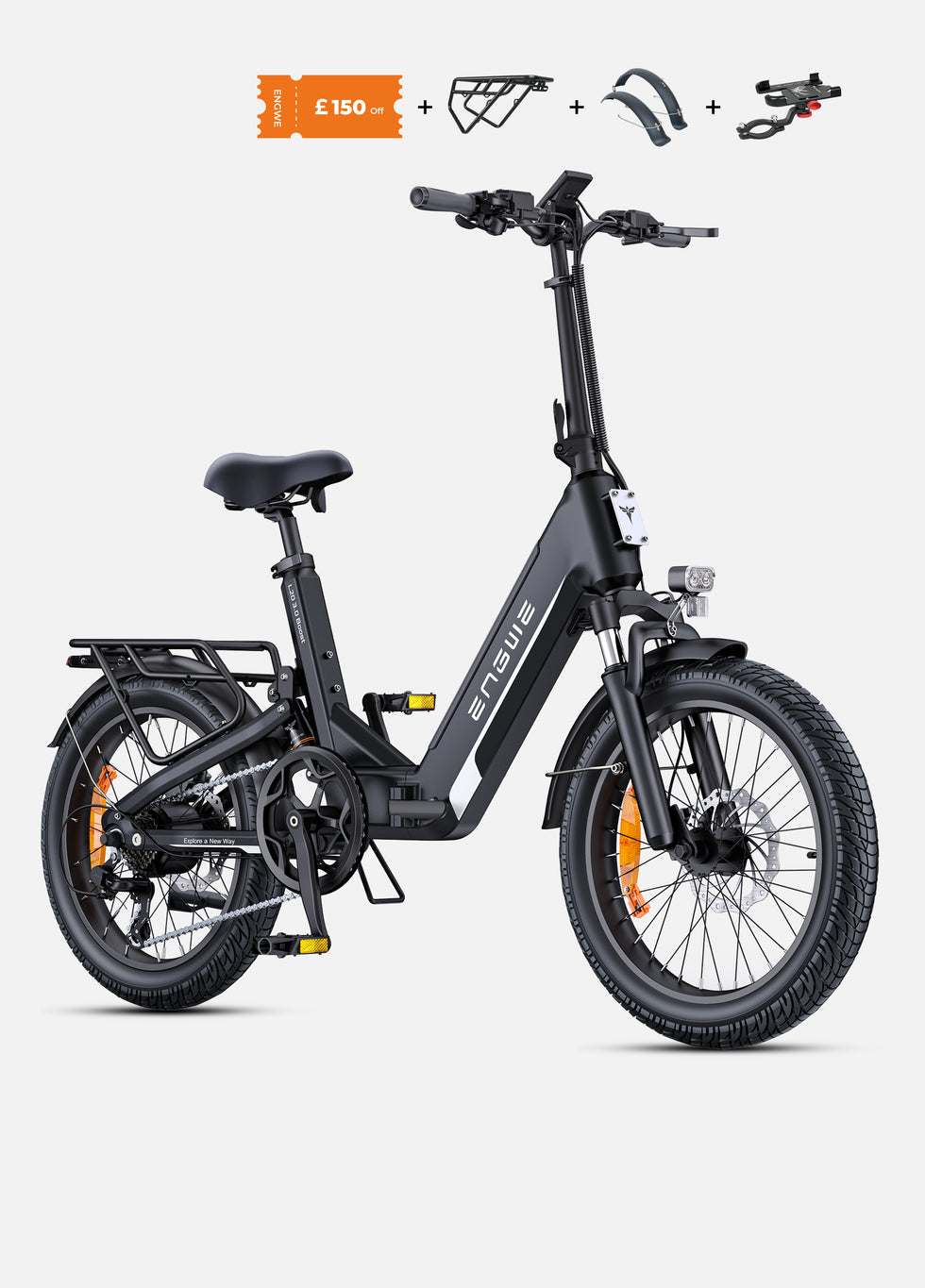
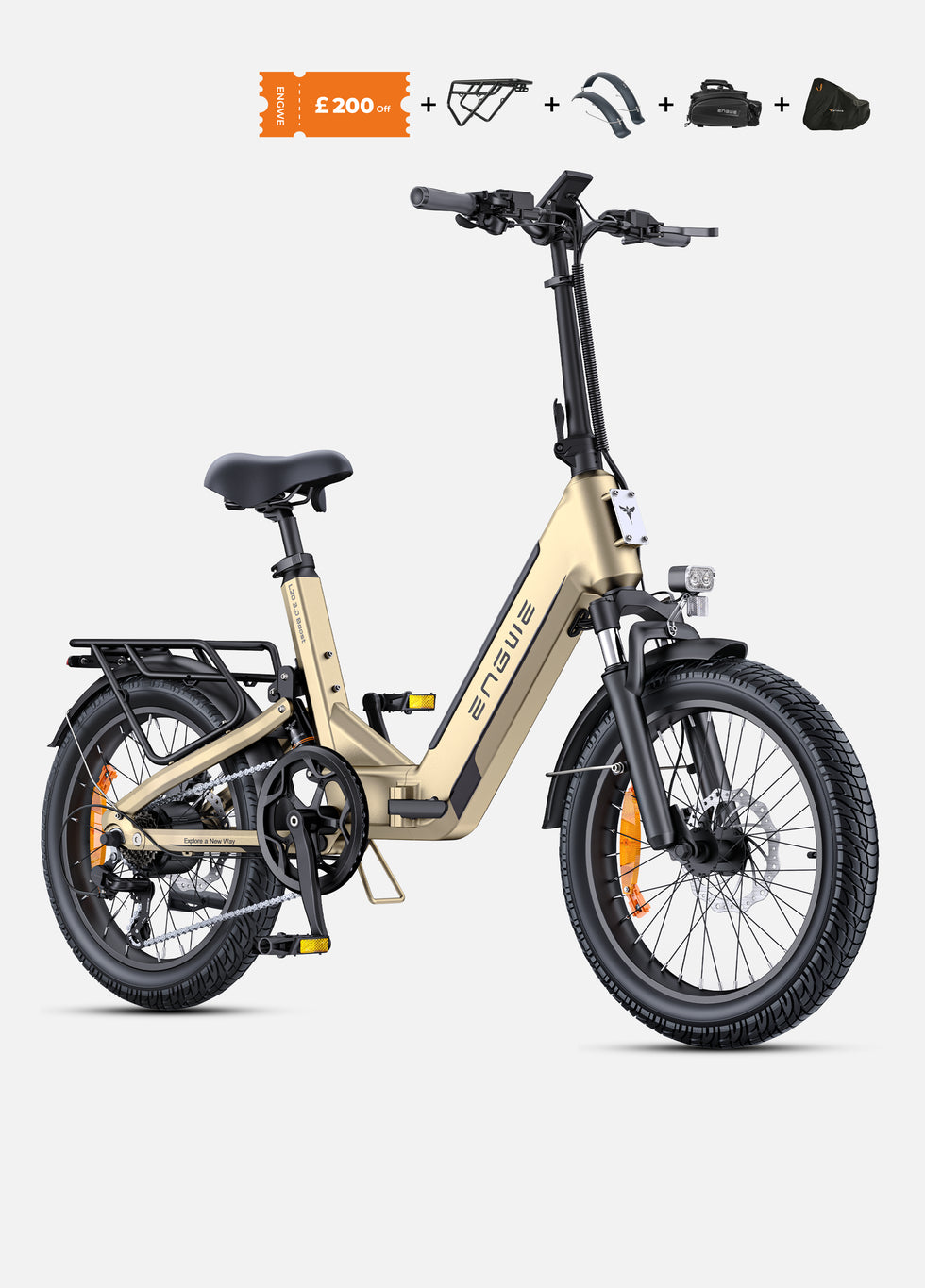
ENGWE EP-2 3.0 Boost: A Folding Option for Mixed Terrain
Riders who like the idea of an electric mountain bike that folds can look at the EP-2 3.0 Boost, which ENGWE lists for tarmac, gravel-paved paths, sandy beaches and grass, and country roads with paved trails. A 75Nm hub motor, torque sensor and five assist levels cover the climbing side, while the 648Wh battery and 120km lab-tested range cover distance.
In the box you’ll find mudguards, a rear rack and a kickstand, which adds to the picture for anyone comparing the best value electric mountain bike options. Key specifications:
• Motor: 48V hub motor, 75Nm, torque sensor
• Battery: 48V 13.5Ah (648Wh), removable; 4A charger, about 3.5 hours
• Range: 120km lab-tested; real-world 120km at assist 1, 100km at assist 3, 80km at assist 5 (75kg rider, 25°C, flat road)
• Frame and fork: foldable magnesium alloy step-through; 50mm hydraulic fork with adjustable lockout
• Tyres and brakes: 20 x 4.0 with a 3mm anti-puncture layer; 180mm rotors with dual-piston hydraulic discs; Shimano 7-speed
• Water protection: IPX7 wiring, IPX6 display and lights, IPX5 motor, controller and battery box
• Size and load: 32.3kg; folds to 97 x 53 x 81cm; 150kg payload; rider height 165 to 190cm
• Extras: ENGWE app over Bluetooth; CE EN15194 by TÜV

The Verdict on Value
Electric mountain bikes are worth it for riders whose routes include hills, rough surfaces or long distances, because the motor, suspension and battery solve problems a pedal bike makes you work around.
The best value electric mountain bike for you will depend on the ground you ride most. Read the full specification, check the test conditions behind any range figure, confirm that any electric mountain bike UK buyers consider meets the legal limits, and look at what comes in the box. If steep lanes or long weekend routes are part of your week, ENGWE’s UK product pages are a straightforward next stop.
FAQs
1. Do I need a mid-drive motor for an electric mountain bike on hilly UK routes?
1. Do I need a mid-drive motor for an electric mountain bike on hilly UK routes?
Not necessarily. A mid-drive motor sits near the cranks and transfers power through the bicycle's gears, while a hub motor drives the wheel directly. With a hub motor, changing gear adjusts your pedalling effort rather than the motor's gearing.
The ENGWE Engine Pro 3.0 Boost combines a UK-legal 250W hub motor delivering up to 90Nm with a torque sensor and Shimano 7-speed gears. This allows riders to select easier pedalling gears while the motor adjusts assistance according to pedal pressure, particularly useful on rolling countryside routes.
2. Can one electric mountain bike handle weekday commuting and weekend countryside rides?
2. Can one electric mountain bike handle weekday commuting and weekend countryside rides?
Yes. For mixed use, prioritise tyres suited to both tarmac and gravel, a battery covering your return journey, and practical equipment such as mudguards and a rear rack. These features make one bike useful throughout the week.
The ENGWE EP-2 3.0 Boost combines 20 × 4.0-inch hybrid tyres with a 3mm puncture-protection layer, 75Nm of torque-sensing assistance and a 648Wh battery. Its included mudguards help reduce road spray, while the rear rack accommodates everyday luggage, making it practical for commuting and permitted weekend countryside routes.
3. Is an electric mountain bike worth considering for 50km weekend rides with hills?
3. Is an electric mountain bike worth considering for 50km weekend rides with hills?
Yes, particularly when your route includes sustained climbs and mixed surfaces. For a 50km ride, consider battery capacity, expected assistance level, elevation gain and the distance remaining after the final climb. Leave a reserve rather than planning around maximum advertised range.
The ENGWE E26 features a removable 48V 16Ah (768Wh) battery with a published pedal-assist range of up to 140km. Its 26 × 4.0-inch tyres also provide cushioning on uneven country tracks. Actual range varies with gradients, rider weight and assistance settings, so plan your return journey accordingly.
4. When does full suspension add value on British woodland and gravel routes?
4. When does full suspension add value on British woodland and gravel routes?
Full suspension can be particularly useful on routes with repeated roots, ruts and uneven surfaces. The front fork absorbs impacts at the handlebars, while rear suspension lets the back wheel move independently over bumps. Tyre volume provides additional cushioning.
The ENGWE Engine Pro 3.0 Boost combines 50mm front suspension travel with 62mm rear travel for rides involving frequent surface changes. The ENGWE EP-2 3.0 Boost uses a 50mm front suspension fork and 20 × 4.0-inch tyres, providing front-end shock absorption and tyre cushioning for gravel paths and lighter woodland routes.
5. Can I ride an affordable electric mountain bike on UK bridleways and forest tracks?
5. Can I ride an affordable electric mountain bike on UK bridleways and forest tracks?
Yes, where cycling is permitted and the bike meets UK electrically assisted pedal cycle regulations. In England and Wales, public bridleways are open to cyclists, but public footpaths do not generally provide cycling rights. Forest and trail-centre access also depends on local rules.
The ENGWE E26 has a UK-rated 250W motor, 26 × 4.0-inch tyres and 180mm hydraulic disc brakes at both wheels. These specifications suit permitted countryside routes combining gravel and uneven surfaces. Always check access signs and select trails appropriate to the bicycle's intended use.
6. What maintenance costs should I consider when buying a good-value electric mountain bike?
6. What maintenance costs should I consider when buying a good-value electric mountain bike?
Allow for replacement brake pads, tyres, chains, lubrication and periodic servicing, particularly if you frequently ride muddy British tracks. Buying an electric mountain bike with puncture protection and corrosion-resistant components can help address everyday maintenance concerns, although regular inspections remain essential.
The ENGWE EP-2 3.0 Boost includes 20 × 4.0-inch tyres with a 3mm puncture-protection layer and an anti-rust chain. Its hydraulic disc brakes use 180mm rotors at both wheels. These specifications are relevant to gravel riding and repeated braking, while routine cleaning and servicing help maintain performance over time.