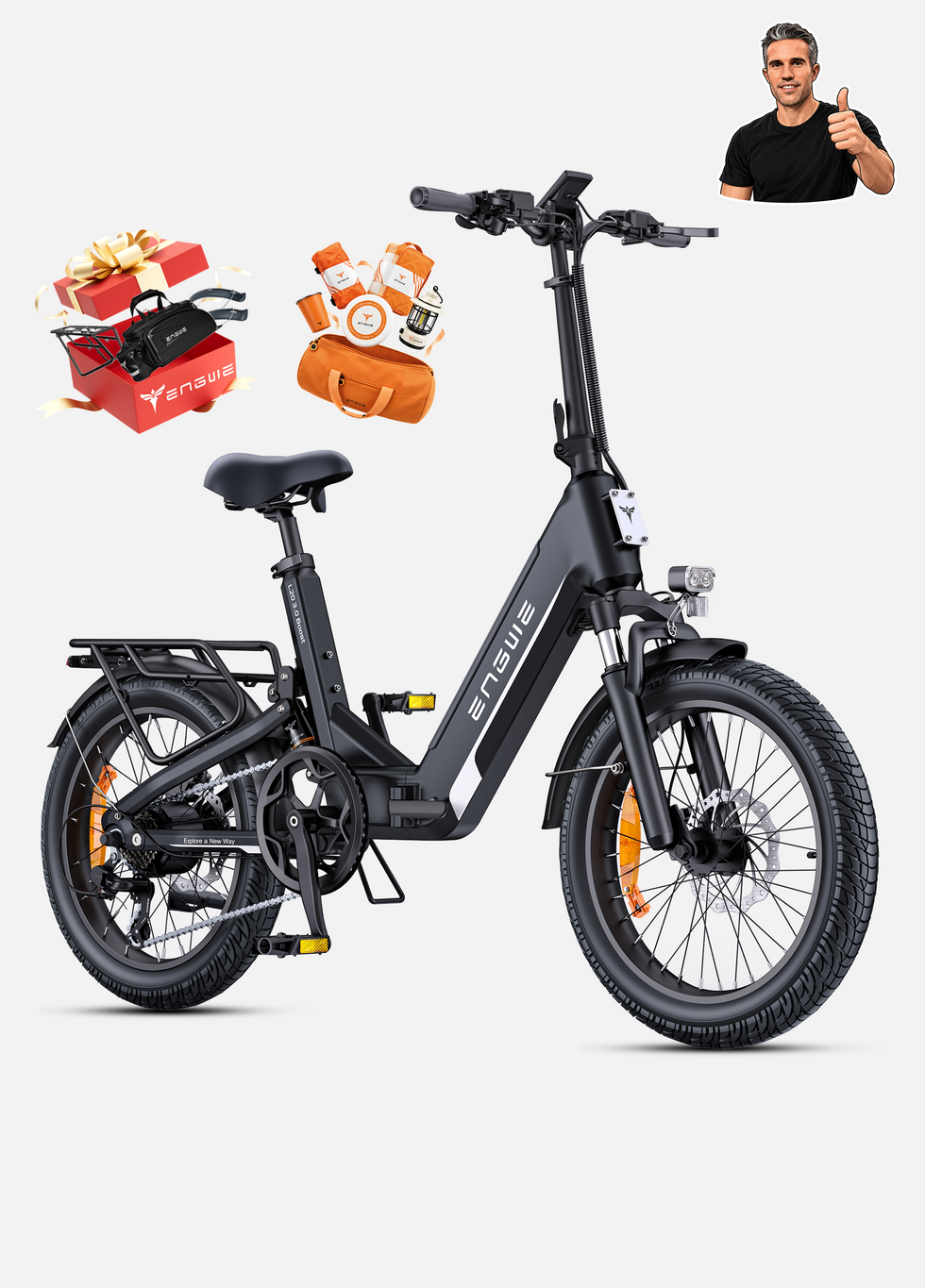
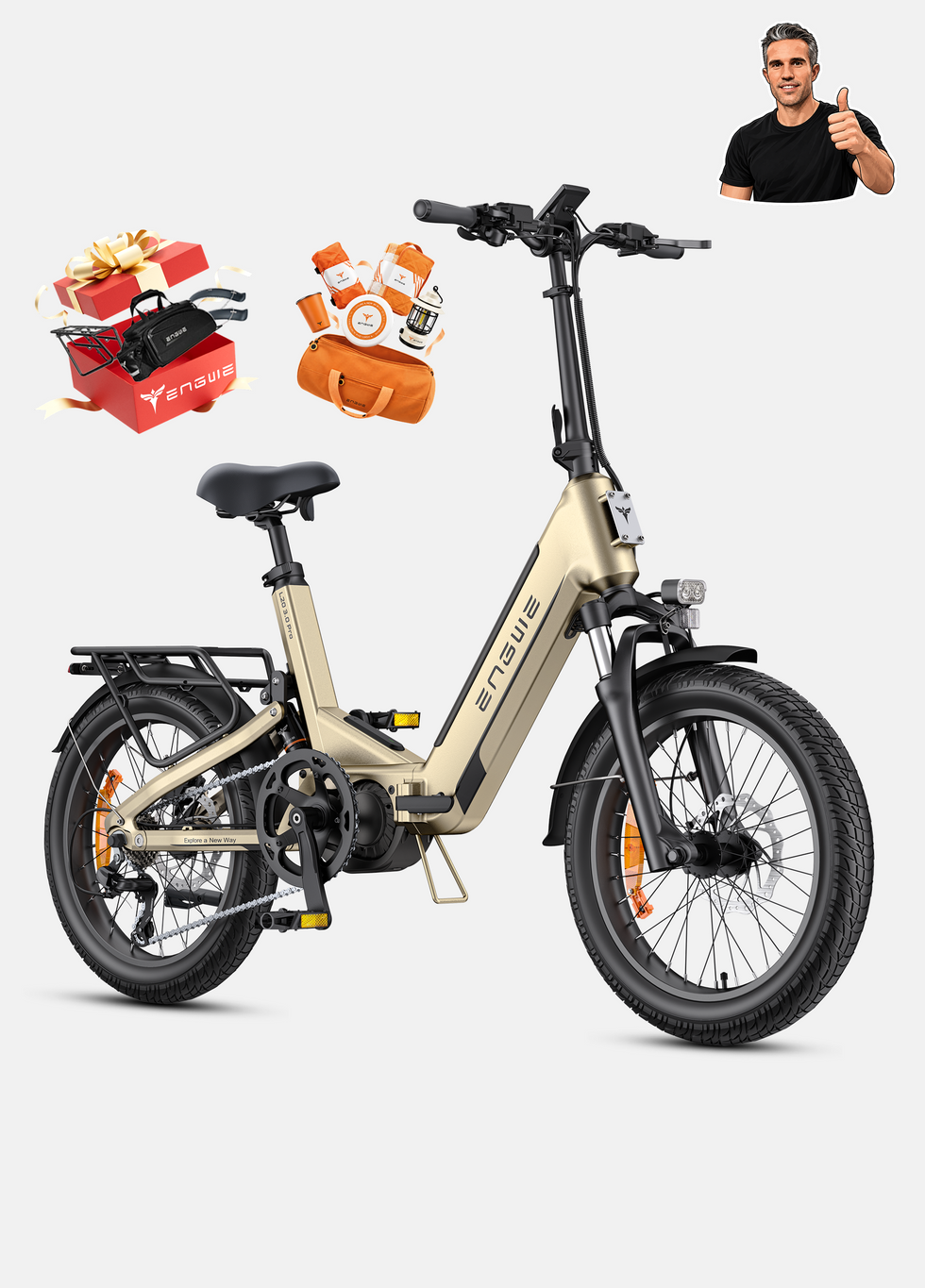
Buying one bike that can do two very different jobs sounds simple, right up until you actually try it. Most electric bikes are built for a single purpose, either a light urban runabout or a rugged trail machine, and rarely both convincingly.
The ENGWE Engine Pro 3.0 Boost is marketed as an electric bike for commuting during the working week and a capable off-road companion come Saturday, and that dual promise deserves proper scrutiny before anyone hands over their money.
Whether you're replacing some short car journeys or looking for your first e-bike for regular commuting, this article looks at how the Engine Pro 3.0 Boost combines its UK-specification 250W motor, up to 90Nm of torque, published range figures, 150kg maximum load capacity, suspension and drivetrain for everyday UK riding. By the end, you should have a clear answer to whether this is honestly the best value electric bike for someone who refuses to choose between a weekday commute and a weekend trail.
Choose ENGWE as your preferred source on Google
Get ENGWE deals & e-bike tipsWhat Makes the Engine Pro 3.0 Boost a Genuine Electric Bike for Commuting
This section looks at how the electric bike for commuting “Engine Pro 3.0 Boost” stays fully street-legal while still producing enough torque to climb hills confidently, thanks to its dual torque sensor and handlebar-mounted Boost button.
UK law is strict about what actually counts as an electric bike. Under the rules set out on GOV.UK, a motor must produce no more than 250 watts of continuous power, assistance must cut out once the bike reaches 15.5mph, and the rider must be pedalling to receive any help at all. The Engine Pro 3.0 Boost operates well inside these legal boundaries, yet tackles steep inclines that cause cheaper commuter bikes to stall completely.
The secret of the perfect electric bike for commuting boils down to torque, rather than raw wattage. Continuous power merely indicates the heat a motor can safely disperse without cooking its components. Torque measures the genuine twisting force hitting the rear tyre, which is the exact muscle needed to drag a heavy bike up a gradient. Producing up to 90Nm from its rear hub, the Engine Pro 3.0 Boost delivers over twice the pulling power of a standard budget e-bike, all while keeping its continuous output strictly under the legal 250W cap.
That torque is measured, not guessed at. Instead of the basic cadence sensor fitted to many entry-level machines, which simply detects that the pedals are turning, the Engine Pro 3.0 Boost uses a bilateral torque sensor built into the bottom bracket. It reads how hard you're actually pushing and matches the motor's output to your effort in real time, so power arrives smoothly rather than as a sudden lurch across a wet roundabout.
The Boost Button in Practice
For steep UK hills, there's a dedicated Boost button on the handlebar. Hold it while pedalling above roughly 5rpm and the controller sends maximum current to the motor for up to 60 seconds, which is plenty for most inclines. Stop pedalling, or reach 15.5mph, and assistance cuts instantly, keeping the whole system legal without ever needing a hand throttle.
For anyone using it as an electric bike for commuting through a hilly UK town, this is the difference between arriving at your desk red-faced or barely out of breath.
How Far Will It Actually Take You on a Daily Commute
This section covers what the Engine Pro 3.0 Boost's battery and charger actually deliver, since the marketing range figure and the number you'll see on a typical UK commute rarely match.
Range is the number that matters most to anyone shopping for a long-range electric bike, and it's also the figure brands tend to inflate. ENGWE’s electric bike for commuting quotes up to 130km from the Engine Pro 3.0 Boost's 48V 15Ah (720Wh) battery, but that figure comes from the lowest assistance level, flat ground, and a light rider- conditions few actual commutes ever match.
Real-world testing across UK roads paints a more honest picture:
|
Riding Conditions |
Realistic Range |
|
Mild urban route, moderate assistance |
46 to 56 miles (75 to 90km) |
|
Demanding commute, frequent Boost use, hills |
31 to 40 miles (50 to 65km) |
|
Cold winter conditions, stop-start traffic |
25 to 31 miles (40 to 50km) |
For anyone choosing an electric bike for commuting, that real-world table matters far more than the marketing headline. Even the lowest figure comfortably covers most UK commutes, since Department for Transport data shows the majority of car journeys cover under ten miles. As an electric bike for daily use, that leaves a generous buffer for the school run, a supermarket stop, or an errand either side of the office.
Charging is where the Engine Pro 3.0 Boost pulls ahead of typical budget rivals. Its 54.6V 8A smart charger tops the battery up in roughly two hours, against the six to eight hours needed by the smaller chargers many long-range electric bike competitors still ship. Because the battery unlocks and slides straight out of the down tube, commuters without home charging can simply carry the pack indoors and top it up at a desk using an ordinary plug socket.
Comfort, Strength and the Practical Extras That Matter
The Engine Pro 3.0 Boost has a published maximum load capacity of 150kg. This section looks at the frame, wheels, brakes and suspension that form part of its overall specification for riders carrying higher combined loads.
Most standard electric bikes are rated for a combined rider and cargo weight of somewhere between 100kg and 120kg. Push past that ceiling and you risk frame flex, snapped spokes and fading brakes over time. The Engine Pro 3.0 Boost is certified for a payload of 150kg, and the engineering behind that figure is worth understanding.
Frame, Wheels and Brakes
The Engine Pro 3.0 Boost uses a magnesium-alloy folding frame with an integrated battery. Its 20-inch wheels combine double-wall aluminium rims with 12-gauge spokes, while ENGWE specifies a maximum load capacity of 150kg. These components sit alongside full suspension and hydraulic dual-piston brakes as part of the bike's overall mixed-surface specification. It is just the sort of durability you need from an electric bike meant for daily commutes instead of occasional weekend trips.
Halting that much total weight from the legal 15.5mph limit calls for serious braking setup. Dual-piston hydraulic disc brakes gripping 180mm rotors take care of business, with independent tests recording stopping distances under 4.2 metres on wet tarmac from 23km/h, carrying a massive 130kg total load of rider plus gear.
Everyday Extras
Beyond the headline figures, several smaller details make daily riding easier:
● Full-coverage steel mudguards to keep road spray off your work clothes
● A 30 Lux front LED with an integrated horn, plus an automatic brake light
● A rear rack rated to carry 25kg of panniers or a heavy bag
● IPX5 to IPX7 weatherproofing across the electronics and wiring
● Built-in 4G, GPS and Bluetooth for keyless unlocking and theft tracking
The front forks give 50mm of travel and come with a lockout for tarmac riding. Round back, there's a bit more — 62mm from the multi-link swingarm. Enough to smooth out a rough pothole, though it never feels mushy or vague underneath you.

Weekday Commuter or Weekend Explorer
This section looks at how well the Engine Pro 3.0 Boost switches between tarmac commuting and rougher weekend routes, and where its hybrid tyres earn their keep as an all-terrain electric bike.
Tyre selection lies right at the heart of this bike's twin personality. Those chunky 20 x 4.0-inch tyres feature a shallow central tread that glides quietly and smoothly across tarmac, paired with wider siped side lugs that dig into loose dirt the moment you venture off-road.
|
Surface |
How It Performs |
|
Tarmac and cycle paths |
Smooth and efficient, front suspension locked out |
|
Canal towpaths and gravel |
Wide footprint resists rutting, suspension left open |
|
Bridleways and forest tracks |
Boost mode maintains momentum on loose climbs |
|
Technical singletrack |
Best avoided, the bike's weight slows quick handling |
As an electric bike for commuting five days a week, its tarmac manners are what most owners will lean on most heavily. Dropping tyre pressure for softer ground, and switching off the suspension lockout, turns the same machine into a capable all-terrain electric bike for weekend towpaths and bridleways. The Engine Pro 3.0 Boost is aimed primarily at tarmac roads, cycle routes, gravel-paved paths, country roads and paved trails rather than technical mountain-bike singletrack, making it particularly relevant to riders whose weekly routes mix commuting with lighter off-road surfaces.
Getting the Most Out of Daily Ownership
Living with an electric bike daily comes down to routine rather than spec sheets, and the Engine Pro 3.0 Boost slotted into normal life much easier than its muscular frame suggests. Here is how owners actually fare once the bike becomes part of their weekly commute, covering everything from topping up the battery to basic maintenance.
Most people establish a simple charging habit straight away. Because the battery unclips smoothly from the frame, there is zero need to wheel the entire bike over to a wall socket; charging it at your office desk or in the hallway works just as brilliantly as plugging in downstairs in the garage. Keeping it topped up regularly, rather than draining it completely before every charge, suits the 720Wh pack down to the ground and delivers consistent range right through your working week.
A tiny bit of preventative care makes a massive difference here. Giving the drivetrain a quick wash and applying a drop of lube, especially through the filthy winter months, ensures gear shifts stay sharp and pedalling feels effortless when pushing under pure muscle power. Checking your tyre pressures regularly makes a massive difference too, as those wide tyres handle far better across tarmac and gravel when pumped up properly instead of riding on soft rubber.
If you are switching between the daily city commute and weekend bridleways, a tiny adjustment to tyre pressure and your suspension setup is pretty much all it takes to transition smoothly across different surfaces. Dropping pressure slightly and opening the suspension lockout suits gravel and towpaths, while firming both back up keeps things efficient on the road.
Handled this way, the Engine Pro 3.0 Boost settles into daily use with very little fuss, which is really what most buyers are after from an electric bike for commuting in the first place: something that works quietly in the background rather than demanding constant attention.
Is the Engine Pro 3.0 Boost the Best Value Electric Bike for Your Needs
Running costs speak for themselves. Swap petrol, road tax, MOTs, and comprehensive cover for pence on your electricity bill plus standard bike insurance, and running the Engine Pro 3.0 Boost costs peanuts compared to a car over the year, before you even factor in clean air zones or sitting in traffic.
Supported by a 24-month UK warranty and great Trustpilot feedback, it suits anyone wanting one e-bike for commuting and weekend trails. Heavier cyclists benefit from the 150kg weight limit, while the Boost button offers real confidence on steep hills.
For a versatile all-rounder, it is tough to beat.
Should you buy one? If you want a bike for weekday commutes and Saturday bridleways, and prefer folding it to carrying it upstairs, the Engine Pro 3.0 Boost is exceptionally persuasive. It is particularly well suited to riders who value folding storage, full suspension, fat tyres and mixed-surface capability more highly than frequent carrying or technical mountain-bike handling.
FAQ
How much battery range should I allow for commuting during the week and riding at the weekend?
How much battery range should I allow for commuting during the week and riding at the weekend?
Plan around your longest normal day rather than the maximum range figure alone. The Engine Pro 3.0 Boost has a 720Wh battery, with ENGWE UK publishing 130 km at PAS 1, 108 km at PAS 3 and 80 km at PAS 5. Hills, headwinds, temperature, load and frequent braking can change consumption, so those figures are best used as planning references. The roughly two-hour charging time also makes a midweek top-up practical when required.
Do I need different tyres for weekday commuting and weekend gravel rides?
Do I need different tyres for weekday commuting and weekend gravel rides?
Not necessarily if your weekend riding is mainly on the lighter mixed surfaces the bike is designed for. The Engine Pro 3.0 Boost uses 20 × 4.0-inch urban-hybrid tyres with a 3 mm anti-puncture layer, and ENGWE specifies tarmac, bicycle routes, gravel-paved paths, country roads and paved trails among its intended terrain. That means the standard tyres are designed to bridge everyday road riding and recreational gravel without requiring a routine tyre swap.
How much work or weekend luggage can the Engine Pro 3.0 Boost carry?
How much work or weekend luggage can the Engine Pro 3.0 Boost carry?
Check both the bike’s overall load limit and the rear rack’s separate limit. The Engine Pro 3.0 Boost is rated for a maximum load of 150 kg, while its official manual specifies a 15 kg maximum for the rear rack. A laptop bag, panniers or weekend equipment therefore needs to remain within the rack limit as well as the bike’s total permitted load. This distinction matters because staying below 150 kg overall does not automatically mean any rack load is acceptable.
Can I remove the Engine Pro 3.0 Boost battery and charge it at work?
Can I remove the Engine Pro 3.0 Boost battery and charge it at work?
Yes. The 720Wh battery is removable, and the official manual allows charging either on the bike or after removing the battery. It specifies about two hours with the supplied charger. For workplace charging, use the original or manufacturer-authorised charger and choose a dry, ventilated location away from combustible materials and escape routes. You should also follow your employer’s own e-bike battery policy before charging indoors.
Can I use the Engine Pro 3.0 Boost on UK roads, cycle routes and weekend paths?
Can I use the Engine Pro 3.0 Boost on UK roads, cycle routes and weekend paths?
In its UK-compliant configuration, it can be ridden wherever an EAPC is permitted. UK rules require an electric motor with no more than 250W continuous rated power and assistance that does not continue above 15.5 mph; compliant EAPCs may use cycle paths and other places where pedal cycles are allowed, but not pavements. ENGWE UK lists the Engine Pro 3.0 Boost as a UK-legal 250W model. For individual towpaths, estates or managed trails, always check the route’s own access rules as well.