Most car journeys in this country are shorter than people assume.
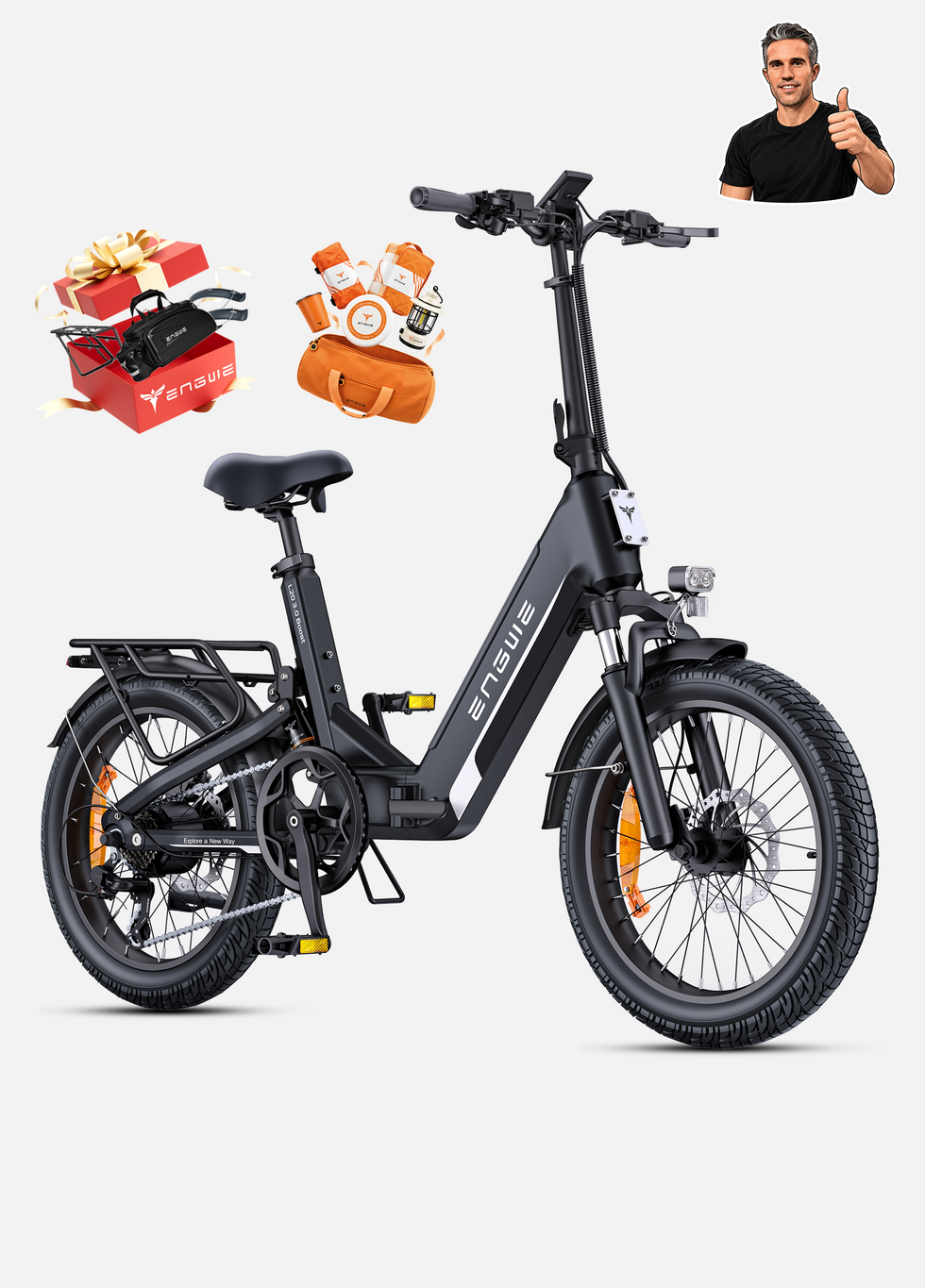
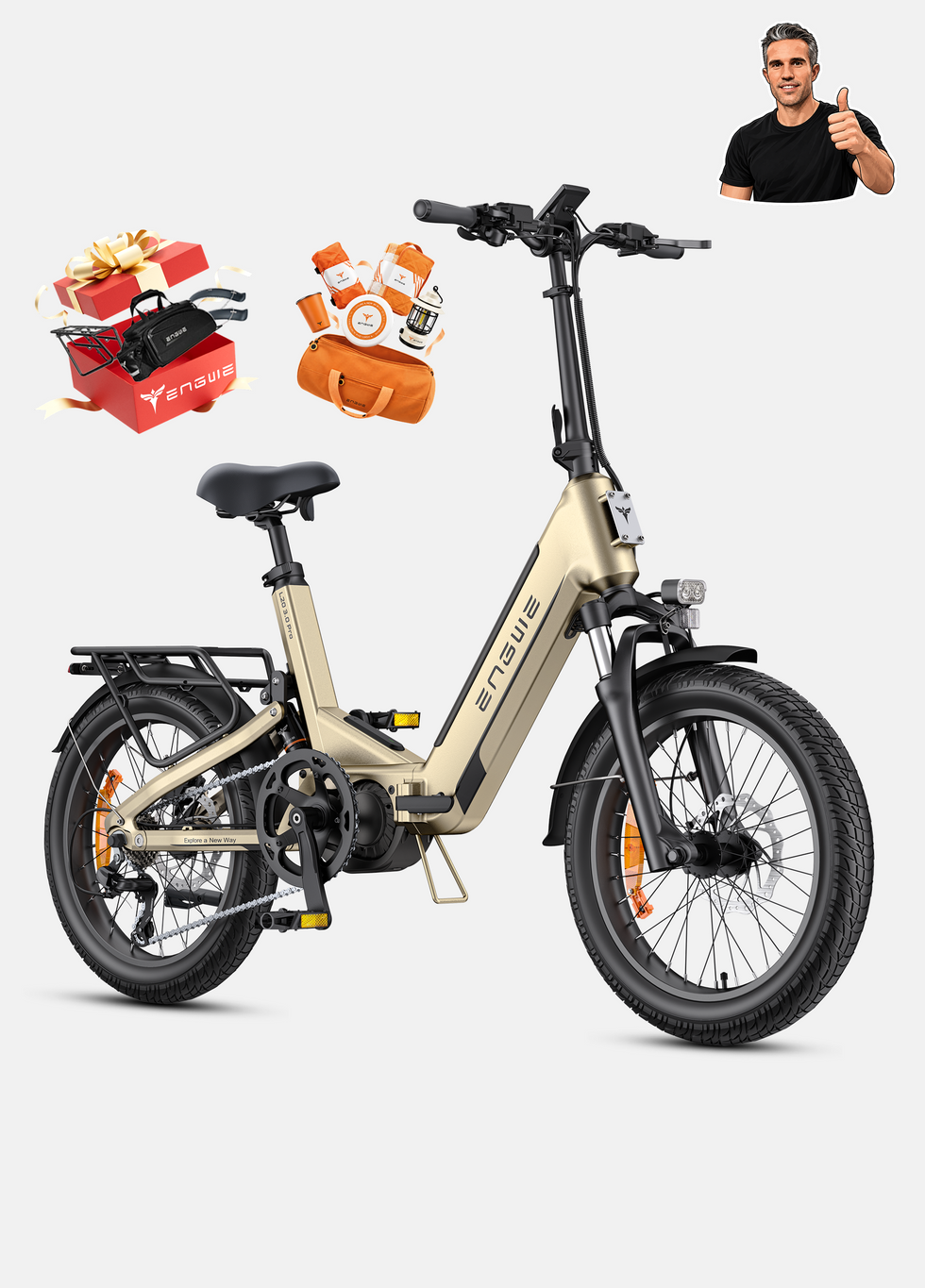
A large share of trips made by car cover under five miles, and the great majority stay under ten, the kind of distance that's genuinely rideable on an electric bike for commuting rather than something that needs a full tank of petrol and a cold engine warming up in traffic. That gap between how far people actually drive and how far they think they need to drive is where a bike like the ENGWE Engine Pro 3.0 Boost starts to make sense.
This isn't a suggestion to sell the car outright. It's a more modest question: for the short, repeatable trips that make up most of a typical week, could an electric bike for commuting genuinely take over some of them? Below is a realistic look at what the Engine Pro 3.0 Boost can and can't do.
Choose ENGWE as your preferred source on Google
Get ENGWE deals & e-bike tipsA Legal, Torque-Sensing Electric Bike for Commuting on UK Roads
This section explains how the Engine Pro 3.0 Boost delivers strong, hill-climbing power while staying fully within UK law, which is the foundation of any electric bike for daily use on public roads.
Why 250W Doesn't Mean Weak
UK regulations cap a legal e-bike's motor at 250W of continuous power, require assistance to cut off at 15.5mph, and demand that the motor only helps while you're actually pedalling. Full details sit on the government's own electric bike rules page. None of that limits how much torque a motor can produce in short bursts, and that's where this bike separates itself from a typical budget commuter. Its 48V hub motor stays locked at a 250W continuous limit. But it still pumps out up to 90Nm of torque thanks to a dual-sided torque sensor right in the bottom bracket.
Cadence- and torque-sensing systems respond to rider input differently. Cadence sensors primarily detect crank rotation, while torque sensors respond more directly to pedalling effort. The Engine Pro 3.0 Boost uses a torque sensor to provide assistance that responds proportionally as rider effort changes. A torque sensor reads how hard you are actually pushing and ramps up the assistance to match. Way more natural. Especially when you are navigating a wet roundabout or hitting a sudden, unexpected hill.
How the Boost Button Works Without Breaking the Law
A handlebar-mounted Boost button lets the rider call on the full 90Nm for short climbs. It cuts out automatically the moment pedalling stops or the legal speed limit is reached, so the bike keeps working within EAPC rules even at its hardest.
Long-Range Electric Bike for UK Commutes: How Far Will It Actually Go?
From this section you can learn about what kind of real-world distance the Engine Pro 3.0 Boost delivers as the electric bike for commuting once British weather, hills and cold mornings are factored in, rather than relying on the best-case number on the box.
Best-Case Range vs Real-World Range
As a long-range electric bike UK, it runs on a 720Wh battery built from 21700 lithium-ion cells. The manufacturer's laboratory figure of 130km on the lightest assist setting is a genuinely useful upper bound, though it assumes flat ground and a light rider. Real UK riding looks different depending on conditions:
● Mild, Undulating Urban Commute, Moderate Assistance: roughly 45 to 55 miles
● Hillier Route Or A Heavier Load, Higher Assistance: roughly 30 to 40 miles
● Cold, Stop-Start Winter Commute: roughly 25 to 30 miles, since cold weather increases internal resistance in lithium-ion cells
Why Range Still Beats Most Car Journeys
Even at the lower end of that range, it comfortably covers the shorter half of the UK's typical car journeys, which is precisely the segment this bike is built to take on.
Electric Bike With Fast Charging: Built Around a Working Day
The section below covers how quickly the Engine Pro 3.0 Boost, an electric bike for commuting, gets back to full charge and what that means for a genuine daily commuting routine rather than an occasional weekend ride.
A 2-Hour Charger Instead of an 8-Hour Wait
Charging time varies considerably between e-bike systems. The Engine Pro 3.0 Boost is supplied with a 54.6V 8A charger, and ENGWE specifies an approximately two-hour charging time. The Engine Pro 3.0 Boost solves that with a 54.6V 8A smart charger, taking it from flat to full in around two hours instead of six or eight. That's handy if you forget to plug in overnight, or if you need to head straight back out after work — you won't be left waiting around.
Charging the Battery Away From the Bike
The battery unlocks and slides out of the down-tube, so it can be carried into an office or a flat and charged from a standard socket while the bike itself stays locked up outside or in a bike store. For anyone weighing up an electric bike with fast charging against a car that needs a full tank every week, that two-hour top-up removes one of the more common objections to relying on a bike daily.

E-Bike Cost vs Everyday Car Ownership
This section looks at how the running costs of an electric bike for commuting stack up against keeping a car on the road for the same short journeys, without getting into specific purchase prices.
What a Car Costs That an E-Bike Doesn't
A petrol car's per-mile running cost adds up quickly once several ongoing expenses are counted together, and those costs apply whether the car is doing a two-mile school run or a two-hundred-mile motorway trip:
● Fuel or electricity to actually run it
● Vehicle excise duty, renewed every year
● An annual MOT once the car passes three years old
● Comprehensive insurance
● Routine servicing, from oil changes to brake pads and tyres
● Parking charges and clean air zone fees in many towns and cities
An EAPC-compliant electric bike for commuting like the Engine Pro 3.0 Boost sidesteps most of that list entirely. It doesn't need vehicle excise duty, an MOT, or motor insurance, since it's legally treated the same as an ordinary bicycle.
Where the Savings Add Up Fastest
Charging costs are a small fraction of a tank of petrol, servicing is limited to routine items like brake pads and tyres rather than a full service schedule, and cycle parking is typically free where car parking often isn't. None of that means the bike suits every journey a car would, but for the short, repeatable trips that make up the bulk of most people's weekly mileage, the e-bike cost picture tends to favour the bike quite clearly, particularly once clean air zone charges and city-centre parking are factored into the car side of the comparison.
Folding for Storage, Not for Carrying: What Daily Use Really Looks Like
The following section explains what the Engine Pro 3.0 Boost's folding frame is actually good for, since it's easy to assume folding automatically means lightweight portability.
Why 34.7kg Changes the Folding Equation
At 34.7kg unfolded, you aren't casually slinging this thing over your shoulder for a walk up a flight of stairs. Let's be honest. The folding mechanism is purely there to solve a storage problem, not a carrying one.
When it's fully built out, it spans 168cm. Folded down, it shrinks to about 97cm by 53cm by 81cm. That means it easily tucks under a stairwell, into a tight hallway, or straight into the boot of a normal UK hatchback without forcing you to drop the rear seats.
Huge win for apartment or house living if you don't have a garage or a shed. The folding design can also make secure indoor storage more practical for riders who would prefer not to leave the bike outdoors overnight.
Who Gets the Most Out of This Electric Bike for Daily Use
This section sets out the kind of rider and route the Engine Pro 3.0 Boost genuinely suits, since no single bike fits every commute equally well.
Built for Heavier Riders and Rougher Routes
Its 150kg payload rating, built around a die-cast magnesium frame rather than a welded aluminium one, makes it a sound option for heavier riders who might otherwise be close to the structural limits of a standard e-bike. The wide 20-inch by 4-inch tyres and dual suspension handle cracked tarmac, canal towpaths and gravel shortcuts without much drama, which suits anyone whose route isn't entirely smooth cycle lane.
One Bike for Weekdays and Weekends
It also works well as a single bike for both weekday commuting and weekend leisure riding, since the same suspension and torque that help on a rutted towpath also make climbing a hill on the way to work noticeably easier. Where it's less suited is for anyone needing to carry the bike up stairs daily or combine it with regular train travel, given the weight and tyre width involved. For most other short, repeatable UK journeys, it holds up as a genuinely capable electric bike for commuting.
What to Check Before You Switch
From this section you can get an idea of the practical details worth confirming before treating the Engine Pro 3.0 Boost as a car replacement for part of your week.
1. Map Your Actual Route Topography. A hilly commute with sustained climbing pulls real-world range down toward the lower end of what's realistic, so check your route rather than assuming the manufacturer's best-case figure.
2. Check Your Storage Access. Ground-floor storage matters, since the bike's weight makes daily stairs a genuine chore rather than a minor inconvenience.
3. Confirm Train Operator Rules If Relevant. Cycle carriage limits vary considerably between networks, so check before assuming this bike will fit if part of your commute involves a train.
Final Thoughts
The Engine Pro 3.0 Boost isn't trying to replace every car journey you make, and treating it that way would set unrealistic expectations. What it does convincingly is take on the short, repeatable trips that make up most of a typical week's driving: the school run, the local commute, the regular supermarket trip.
Between its genuine torque, a battery that holds up as a proper long-range electric bike for UK conditions, fast charging that fits around a working day, and running costs that undercut a car by a wide margin, it makes a solid case for itself as an electric bike for commuting rather than just a weekend leisure machine. Whether it fits your own week comes down to your route, your storage situation and how often your journeys actually need a car at all, and for a lot of UK drivers, the honest answer might be less often than they think.
FAQ
Which car journeys are most realistic to replace with the Engine Pro 3.0 Boost?
Which car journeys are most realistic to replace with the Engine Pro 3.0 Boost?
Start with short, repeatable journeys where the whole route can be cycled safely and your luggage can be carried on the bike: commuting, local errands and smaller shopping trips are typical examples. In England, 70% of all trips in 2024 were under five miles, while cars were the most frequently used mode for journeys over one mile. The Engine Pro 3.0 Boost combines a 720Wh battery, rear rack and mixed-surface capability for this type of regular local travel.
How much battery range should I allow before replacing a regular car commute with an e-bike?
How much battery range should I allow before replacing a regular car commute with an e-bike?
Work from your complete return journey and leave additional capacity for hills, wind, colder weather, load and higher assistance levels. ENGWE publishes Engine Pro 3.0 Boost figures of 130km in PAS 1, 108km in PAS 3 and 80km in PAS 5 from its 720Wh battery. These figures give you more useful planning points than relying on the single maximum-range number. Its approximately two-hour charging time also allows a practical top-up between journeys when needed.
Can the Engine Pro 3.0 Boost carry work bags or shopping on journeys that I would normally make by car?
Can the Engine Pro 3.0 Boost carry work bags or shopping on journeys that I would normally make by car?
Yes, provided the luggage is securely carried and remains within the applicable load limits. The Engine Pro 3.0 Boost comes with a rear rack and has a published maximum load capacity of 150kg. When planning a work or shopping trip, consider rider weight and everything being carried rather than battery range alone. Using panniers or properly secured rack luggage also keeps weight off your shoulders, which becomes increasingly useful when the e-bike is replacing repeated everyday journeys.
What should I check if I want to replace car journeys with an e-bike throughout the UK winter?
What should I check if I want to replace car journeys with an e-bike throughout the UK winter?
Look beyond range and check braking, tyres, lighting, battery charging and where the bike will be stored. The Engine Pro 3.0 Boost uses hydraulic dual-piston brakes with 180mm rotors, 20 × 4.0-inch tyres, a 30-lux front light and rated protection across its electrical components. Cold, wet conditions can still change energy use and road grip, so leave additional range margin and maintain tyre and brake condition. Charge the battery in a dry location away from escape routes and combustible materials.