Most first-time e-bike buyers obsess over a single number: wattage. It features on every spec sheet, fills the advert headlines, and shop assistants push it because it makes comparing models on paper effortless.
Then you get the bike home, tackle the local hill, and it bogs down in a way that spec sheet failed to warn you about. A pair of bikes both badged as 250W electric bike will feel like completely different machines the second you hit a gradient, a stiff breeze or carry heavy bags.
The figure that actually reveals how it will perform rarely gets noticed: torque. Wattage indicates the motor's total energy capacity, whereas torque determines the sheer pulling power delivered to the road at a specific point, especially when pulling away or slogging uphill. Once you get how these two figures interact, instead of viewing wattage as the full picture, buying a road-legal e-bike becomes far simpler.
Choose ENGWE as your preferred source on Google
Get ENGWE deals & e-bike tipsWhat UK Law Actually Regulates on a 250W Electric Bike
UK regulations control an electric bike's continuous power, its top assisted speed and how that power gets switched on. UK EAPC rules do not specify a separate maximum torque figure, which is why torque is worth considering alongside continuous rated power when comparing how different e-bikes are designed to perform.
Electric bikes sold here fall under the Electrically Assisted Pedal Cycles Regulations 1983, now aligned with the European standard EN 15194. Three things define a legal e-bike in this country:
● Continuous rated power can't go above 250 watts
● Assistance has to cut off once the bike hits 15.5mph (25km/h)
● The motor can only add power while you're actually pedalling, not on its own
Peak torque doesn't appear anywhere in that list. That's exactly why two manufacturers can build very different bikes and both call them fully legal. The 250W electric bike figure is a thermal limit above anything else. It describes how much heat a motor's windings can shed continuously without breaking down, and it has almost nothing to do with how strong the bike feels the second you actually need a push, say pulling off from traffic lights on an incline.
This is where a lot of people misread the electric bike speed limit UK law sets out. The 15.5mph cutoff caps how fast the motor keeps helping, it doesn't cap how hard the motor can help below that speed. A bike engineered with this in mind can throw a lot of force at low speeds, exactly where riders need it most, and still switch off cleanly the moment the legal threshold arrives.
Torque, Not Wattage, Decides How an Electric Bike for Hills Actually Rides
Wattage sets a ceiling on how much power a motor can sustain. Torque is the force that actually drags a loaded bike off the line or up a gradient, and the two don't move together the way most buyers assume.
Higher available torque can make low-speed starts and steeper gradients easier, all else being equal. However, torque should not be read in isolation. Motor architecture, gearing, wheel size, system tuning, bike weight, available power and rider input all influence climbing performance. This is why two road-legal 250W e-bikes can feel quite different even when both comply with the same continuous-power limit.
Crucially, it manages this without coming close to breaching the 250W electric bike continuous threshold, simply because peak torque only needs to hold for a few brief seconds rather than forever.
This explains precisely why two bikes displaying identical wattage ratings end up feeling like entirely different beasts the moment you move away from flat roads. A rider doing five miles a day on dead-flat cycle paths might genuinely never notice. Somebody riding across the rolling countryside that makes up most of rural and suburban Britain will notice within the first quarter mile. Anyone specifically after an electric bike for hills should be paying closer attention to the torque figure than the wattage badge stamped on the box.
Cadence Sensors vs Torque Sensors
How the power actually reaches the wheel matters just as much as how much of it there is, and this comes down to which sensor the manufacturer chose to fit.
Cadence sensors are basically a switch. They notice the pedals turning and release a preset chunk of assistance, and that's often where the jerkiness people complain about comes from, particularly at low speed or on wet cobbles where predictable power delivery actually matters.
Torque sensors function completely differently. Instead of waiting for movement, they detect the exact effort your feet put through the pedals and adjust motor power instantaneously to suit. Anyone who has tried both types will tell you a torque-sensor setup feels like having stronger legs, which is a world away from that abrupt surge of power you get whenever the pedals rotate.
The ENGWE Engine Pro 3.0 Boost Was Built Around This Exact Problem
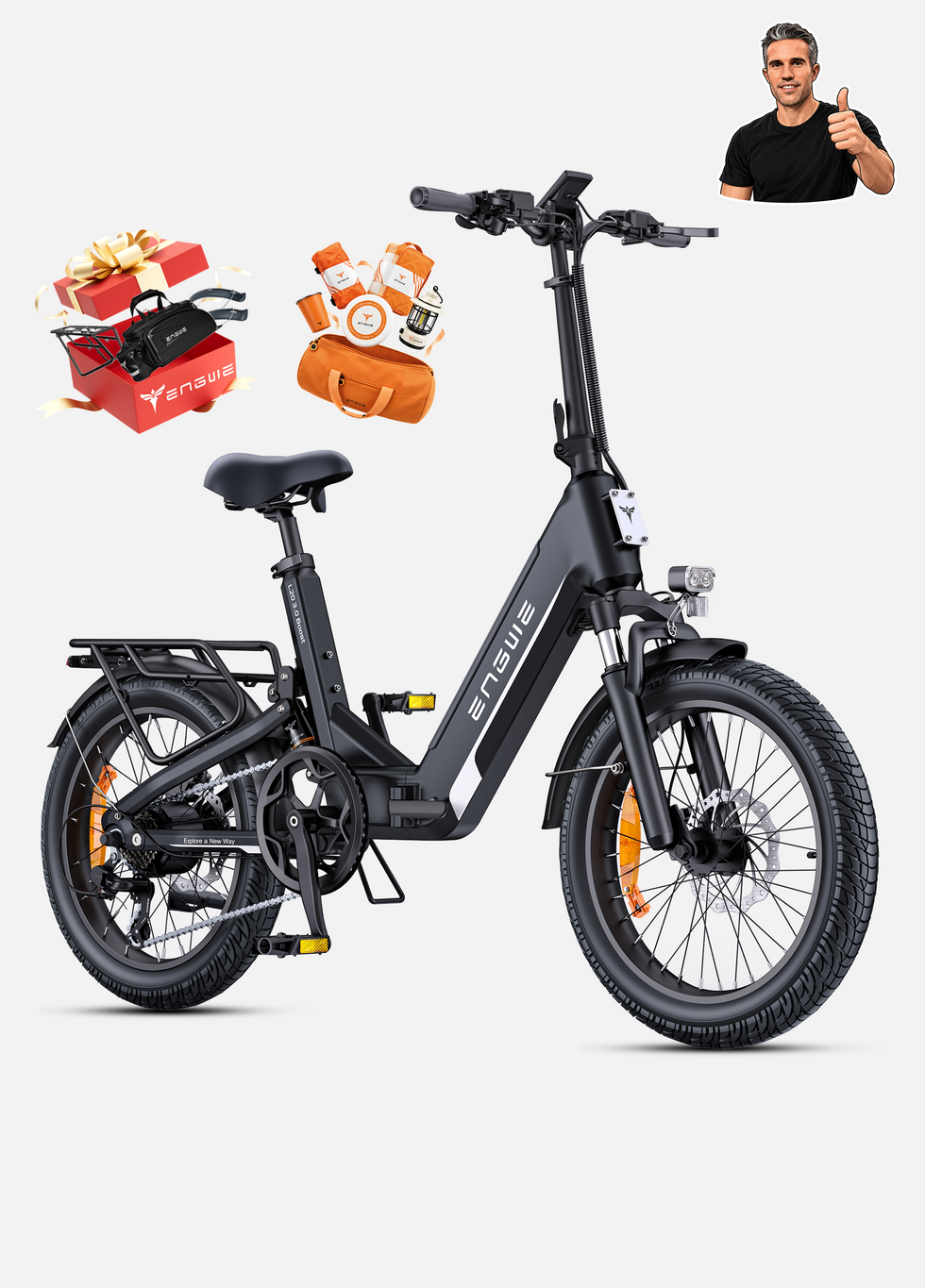
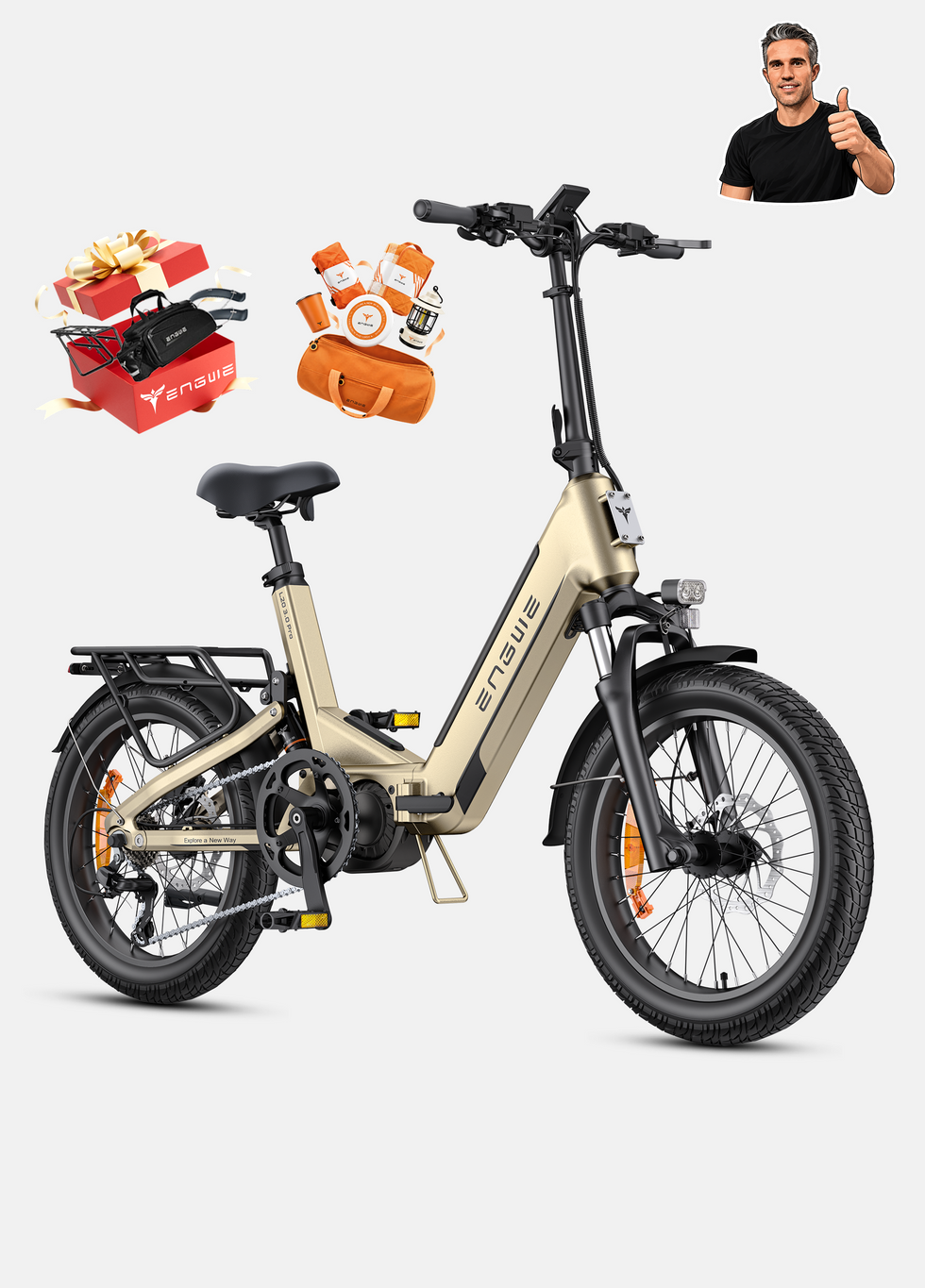
The Engine Pro 3.0 Boost combines a UK-specification 250W hub motor with a torque sensor and ENGWE's Boost function. The torque sensor responds to rider input, while Boost provides access to the bike's advertised maximum torque of up to 90Nm when additional assistance is useful.
ENGWE fitted this model with a high torque electric bike sensor built into the bottom bracket, reading effort from both sides of the crank rather than just one. As you push harder on the pedals, the controller ramps up its response proportionally instead of jumping between fixed steps, and the difference shows up most on the kind of patchy tarmac and canal towpaths this bike tends to actually get ridden on around the UK.

How the Boost Button Adds 90Nm Without Breaking UK Law
Hold down the handlebar Boost button while keeping your feet turning gently, and the controller feeds full power straight into the hub motor. That delivers a sudden 90Nm kick, perfect for conquering brief steep gradients or darting away quickly when the traffic lights turn green. A few built-in limits keep all of this well inside UK rules:
● Power cuts off instantly if you stop pedalling or the bike reaches 15.5mph.
● Each Boost activation is capped at roughly 60 seconds so the motor doesn't overheat.
● The underlying continuous output never rises above 250W, whether Boost is engaged or not.
It's a genuinely useful way round a real limitation. Riders get proper hill-climbing force from a road-legal e-bike without needing a throttle, and without the bike ever stepping outside the EAPC rules that govern it.
Engine Pro 3.0 Boost UK Specifications
|
Component |
UK Specification |
|
Motor |
48V brushless rear hub, 250W electric bike |
|
Peak torque |
90Nm with Boost engaged |
|
Assist sensor |
Dual-sided bottom bracket torque sensor |
|
Top assisted speed |
15.5mph (25km/h), electronic cutoff |
|
Battery |
48V 15Ah (720Wh), 21700 lithium-ion cells |
|
Charging |
54.6V 8A smart charger, roughly 2 hours for a full cycle |
|
Brakes |
Dual-piston hydraulic discs, 180mm rotors |
|
Frame |
Die-cast magnesium alloy, low step-through |
|
Net weight |
34.7kg |
|
Certified payload |
150kg |
If most of your riding week involves rolling terrain rather than a dead-flat commute, this pairing of torque sensor and Boost mode is what separates a bike that's technically legal from one that's actually built for the job in front of it.
Where This Setup Actually Pays Off
A few typical scenarios reveal the real-world difference far better than any spec sheet:
● Pulling away from a junction on an uphill gradient, where a cadence-sensor bike usually pauses briefly before assistance kicks in.
● Tackling a longer rise while carrying panniers or a backpack, where additional available torque can help the bike maintain assistance as the load and gradient increase.
● Battling a strong headwind along an exposed road, where decent low-end torque offsets the drag without forcing you out of the saddle to slog away.
● Moving off from a standstill on a steep hill after yielding to pedestrians, a situation that embarrasses underpowered motors more than anything else.
None of these moments cross the 15.5mph assistance cap or exceed the bike's 250W continuous limit. They are simply everyday examples where torque delivers the muscle that a basic wattage figure completely fails to capture.
Other Road-Legal Electric Bikes Worth Knowing About
ENGWE isn't the only brand building within the same 250W electric bike framework, and a couple of other names tend to come up often enough in UK buying guides that they're worth a mention.
Trek Allant+ 7
Trek's Allant+ 7 runs a mid-drive Bosch motor in a step-through or diamond frame, aimed at riders who want something a bit lighter and more traditional feeling while still getting solid torque for hills, delivered through the mid-drive layout rather than a hub motor.
Carrera Crossfire e
Available via Halfords, the Carrera Crossfire E packs a rear hub motor inside a lower-budget package, tailored for anyone wanting a simple route onto UK-legal e-bikes for brief, flat commutes instead of rougher trails.
Specifications and suited riding styles vary considerably between these three bikes. It pays to check the individual brand sites carefully before deciding which machine fits your daily routes and riding style.
What to Actually Check Before Buying a UK-Legal Electric Bike
Balancing torque output, weight, and battery size against the routes you actually ride counts far more than stacking up wattage stats next to each other, which is precisely where most people mess up initially. It is a dead easy trap to fall into, given every advert shouts about that identical 250W electric bike rating while hiding the critical stuff in the fine print.
A few things worth working through before you commit to a purchase:
● Typical gradients on your regular routes. Rolling hills reward torque more than they reward a higher wattage badge, so it helps to actually think about the streets you ride every week rather than the flattest route you could pick for a test ride.
● Combined rider and cargo weight. Heavier loads need a higher certified payload rating and a frame built to match it, especially if you're regularly carrying a rucksack, panniers, or a child seat on the back.
● Realistic range per charge. Real-world distance usually comes in under the marketing number once hills, cold weather, and cargo get factored in, sometimes by a fair margin depending on how much Boost mode gets used.
● How the motor decides to respond. Torque sensors tend to feel smoother than cadence sensors, especially at low speed or on uneven surfaces like towpaths and broken pavements.
● Battery placement and charging setup. A removable battery makes it far easier to charge indoors overnight if you don't have a garage, a shed, or anywhere safe to leave the bike plugged in outside.
A 250W electric bike engineered with torque delivery in mind, the Engine Pro 3.0 Boost being a fairly clear example, can make everyday UK riding noticeably easier without ever crossing into illegal territory.
Final Thoughts
Wattage tells you how a UK-legal 250W electric bike behaves on flat ground and how fast it's allowed to travel under power. Torque tells you how it behaves the moment a hill, a headwind, or a loaded pannier actually enters the picture, which is usually what riders care about far more day to day.
The Engine Pro 3.0 Boost was built around that gap specifically, using its Boost mode and dual-sided torque sensor to deliver genuine climbing power while staying fully within the 250W electric bike continuous limit and the 15.5mph cutoff. Anyone comparing road-legal electric bikes on the UK market would do well to check both figures rather than just one, since that's usually what separates a bike that merely copes with hills from one that's actually built to handle them properly.
FAQ
Does 90Nm mean the Engine Pro 3.0 Boost is producing 90Nm all the time?
Does 90Nm mean the Engine Pro 3.0 Boost is producing 90Nm all the time?
No. A maximum torque figure describes the highest available rotational force, not a constant output throughout every ride. Maximum torque is most relevant during acceleration, hill starts and demanding climbs; actual assistance changes with riding conditions and system control. The Engine Pro 3.0 Boost is rated at up to 90Nm and uses a torque sensor, so riders should treat 90Nm as available peak capability rather than an always-on level of assistance.
Does more torque make a 250W electric bike faster in the UK?
Does more torque make a 250W electric bike faster in the UK?
Not in terms of its legal assisted top speed. A UK EAPC motor must have continuous rated power of no more than 250W and must not propel the bike above 15.5mph. Torque mainly affects how forcefully assistance can be delivered at lower speeds, particularly when setting off, accelerating or climbing. The Engine Pro 3.0 Boost combines its UK 250W specification with up to 90Nm, so the extra torque is about usable low-speed assistance rather than a higher assisted speed.
How do rider weight and luggage affect how powerful a 250W e-bike feels?
How do rider weight and luggage affect how powerful a 250W e-bike feels?
A higher combined load requires more force to accelerate and more power to maintain speed on a gradient, so the same 250W-rated e-bike can feel different with different riders and loads. When comparing bikes, check torque alongside total load capacity and your normal terrain. The Engine Pro 3.0 Boost provides up to 90Nm and has a published 150kg maximum load capacity, making both figures relevant when planning hilly rides with commuting gear or luggage.
Why does gearing still matter on a high-torque rear-hub e-bike?
Why does gearing still matter on a high-torque rear-hub e-bike?
Because the rider still has to contribute through the bicycle drivetrain. On a rear-hub system, the motor drives the rear wheel directly rather than using the bike’s gears, while selecting an easier gear reduces the pedal force the rider needs at a given cadence. The Engine Pro 3.0 Boost pairs its 90Nm hub motor with a Shimano 7-speed 14–28T drivetrain, allowing riders to adjust their own pedalling effort as gradient and speed change.
Does a torque sensor make an e-bike more powerful than a cadence sensor?
Does a torque sensor make an e-bike more powerful than a cadence sensor?
Not by itself. A torque sensor measures how much force the rider applies to the pedals, while a cadence sensor primarily detects crank rotation. The difference is therefore in how assistance is requested and controlled, not an automatic increase in motor power or torque. The Engine Pro 3.0 Boost combines a torque sensor with up to 90Nm, allowing assistance to respond to pedal effort while the motor remains within its UK 250W specification.