A capable electric mountain bike used to mean a weak hub motor and a battery that gave up halfway up the first proper climb.
Not anymore. Torque sensors, stronger motors and batteries built for a full weekend of riding now show up on electric mountain bikes well within a sub-£2,000 budget. Riding bridleways in the Peak District or fire roads in Wales calls for slightly different things from a bike, and the five below cover that spread, from ENGWE's fat-tyre all-terrain builds to familiar names sold through Halfords, Go Outdoors and Decathlon.
Spec sheets only tell half the story here. The right choice comes down to exactly where you actually ride your bike. Topping a spec comparison simply does not matter. Keep this specific perspective in mind while reviewing the options below. Once the ground gets loose, two electric mountain bikes with virtually identical figures can feel completely different. A torque number printed on the box dictates surprisingly little about navigating wet, rutted trails. Instead, motor placement, battery position, and frame geometry change everything.
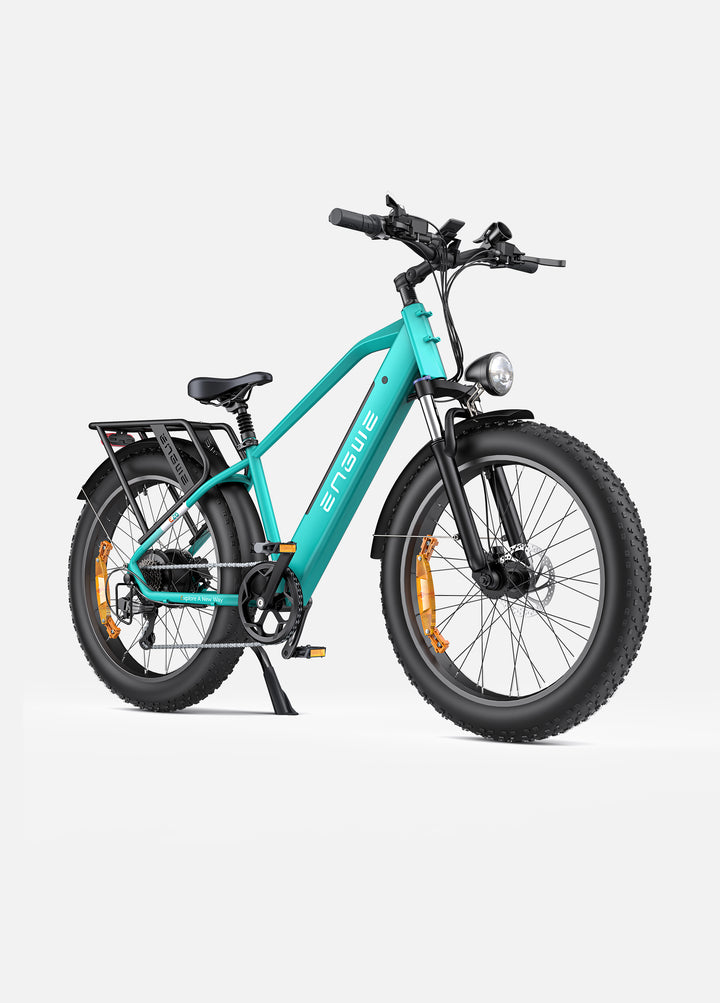
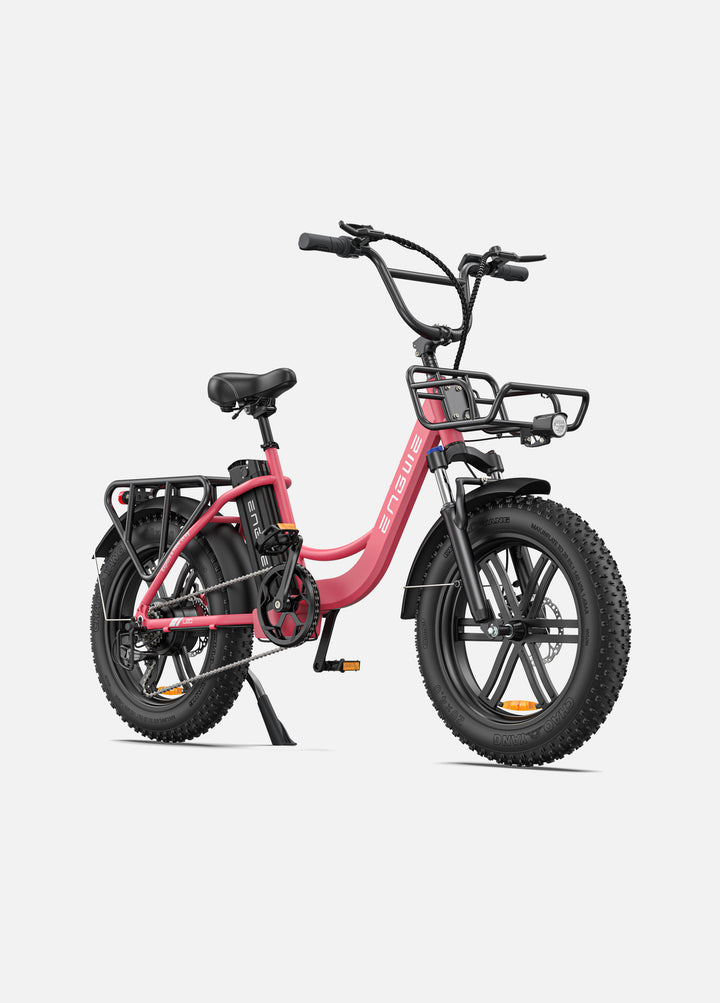
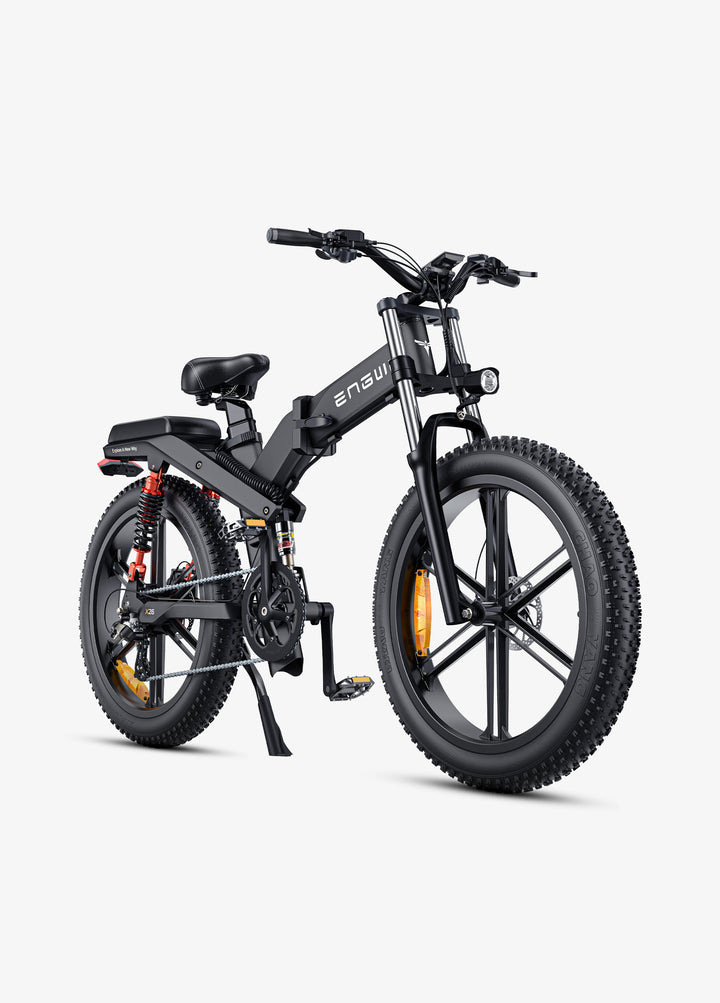
ENGWE E26: Best for Heavy-Duty Trail and Cargo Use
Fitting a considerably wider range of riders than most fat-tyre bikes at this price is a major advantage. The E26 is sold in step-over and step-through geometries. This full-size, non-folding electric mountain bike utilises a rigid 6061 aluminium frame. Stability and load-carrying strongly dictate the priority of this design well above outright agility.
26" x 4.0" Tyres for Grip in Poor Conditions
Fat tyres, 26" x 4.0" of them, give the E26 a wide contact patch and real traction on sand, mud and loose gravel. Narrower-tyred electric mountain bikes tend to struggle exactly here, on the wet British trail surfaces most riders actually deal with. The extra volume takes the sting out of smaller bumps too. The E26 combines its 26 × 4.0-inch tyres with a front suspension fork and suspension seatpost to add cushioning over uneven surfaces.
70Nm Motor with a Rear Cargo Rack Rated to 25kg
A 48V 250W rear hub motor produces 70Nm of torque, drawing from a 768Wh removable battery good for up to 140km at low assist. Push it harder and that range drops to something closer to 45 or 50km. The rigid rear triangle gave ENGWE room to fit a proper cargo rack instead, rated for 25kg. So the E26 isn't just a weekend trail bike. It doubles as genuine load-carrying transport, the kind you'd actually use for a supermarket run or a camping trip.
Hydraulic Brakes and a Suspension Seatpost for Comfort
180mm hydraulic discs front and rear keep stopping power consistent even fully loaded. A front suspension fork and suspension seatpost help absorb bumps and improve comfort over uneven surfaces. Payload capacity sits at 150kg, and net weight runs 33.5 to 34.5kg depending on frame style. Frame flex under load isn't really a concern here, unlike on lighter folding electric mountain bikes built for a different job entirely.

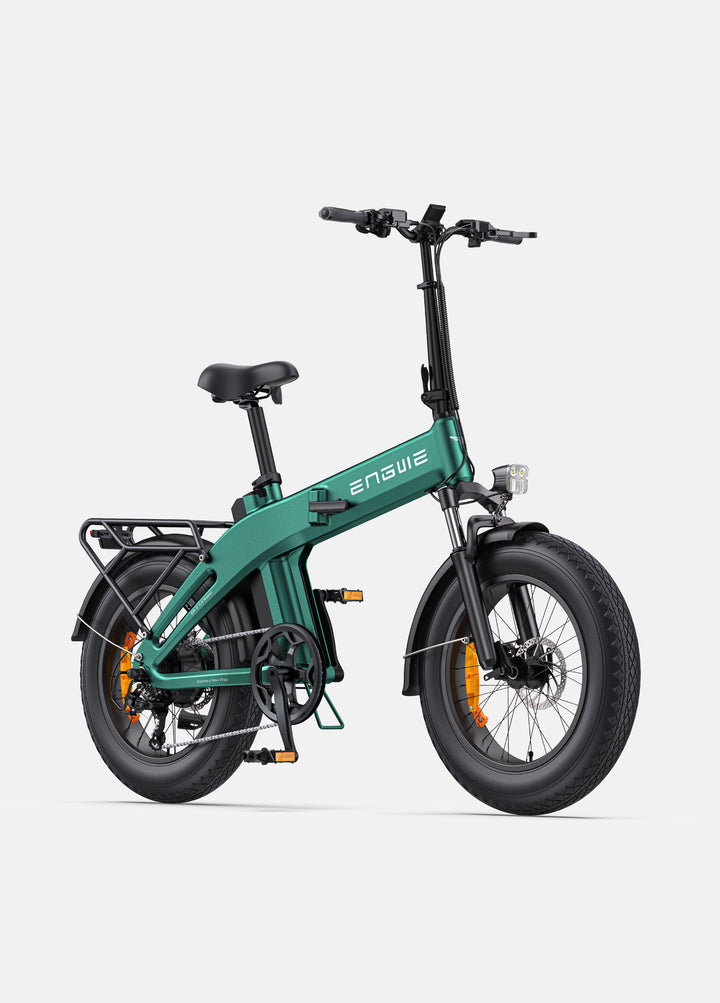
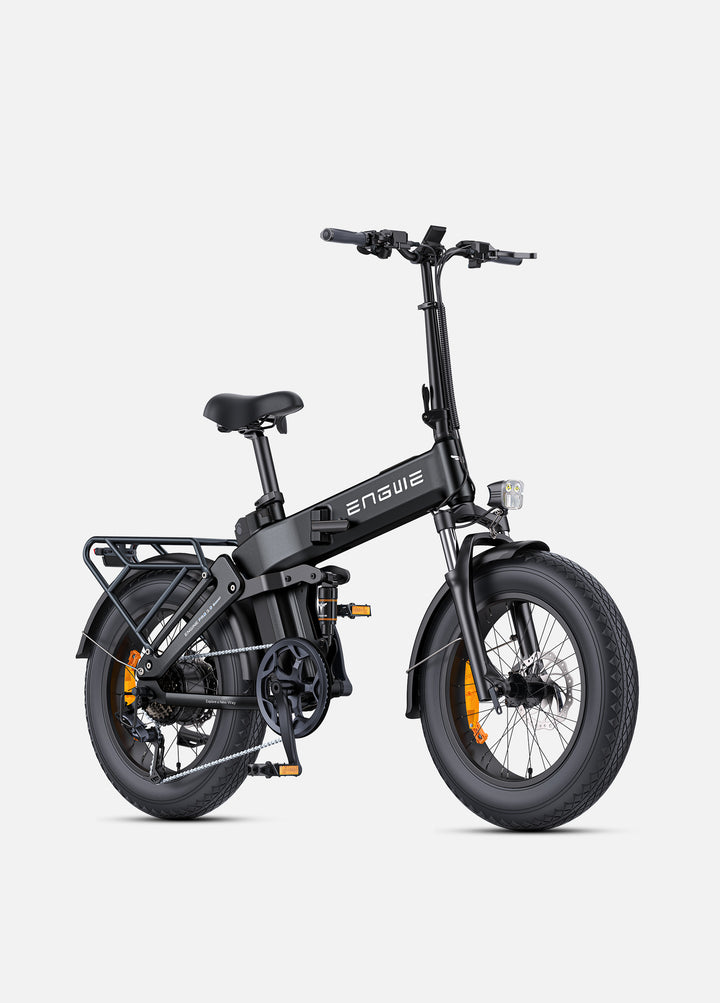
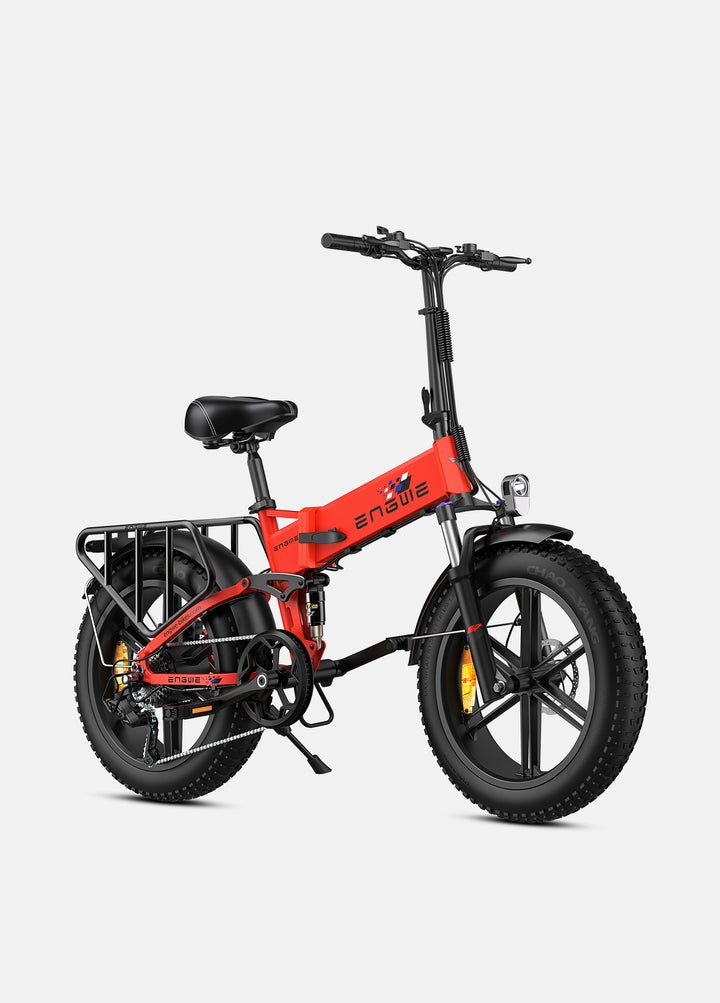
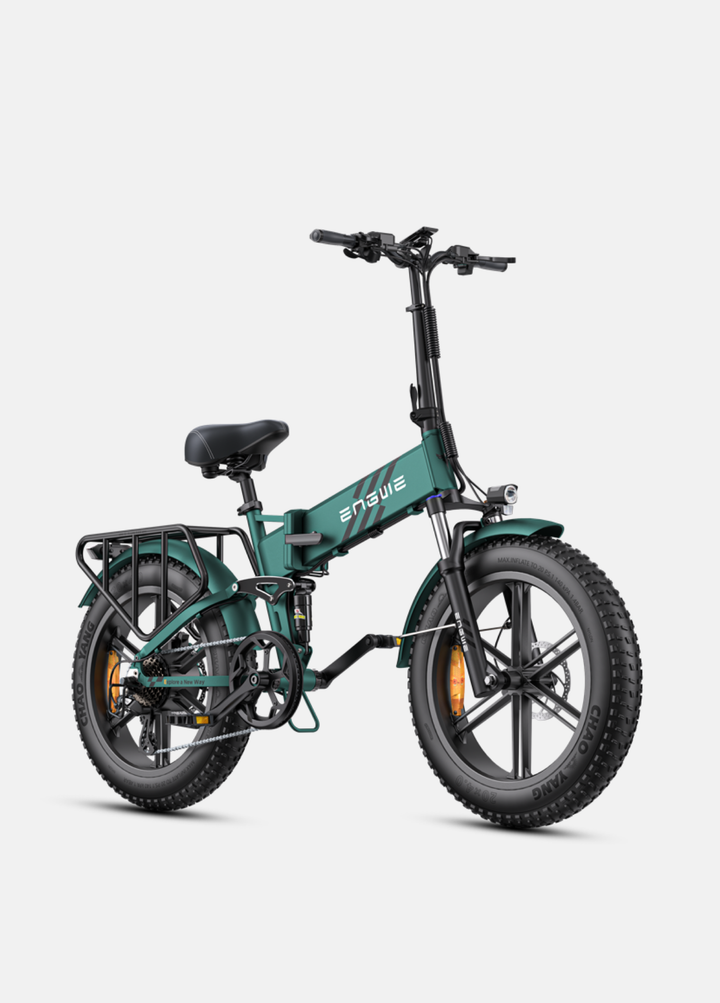
ENGWE EP-2 3.0 Boost: Best for Mixed-Terrain Riders Who Need to Fold and Store It
Off-road capability without needing a garage to store it in, that's the brief for the EP-2 3.0 Boost. Its step-through frame is die-cast from magnesium alloy rather than welded together from aluminium tubing. Casting removes the weld points around the folding hinge, one of the more common failure spots on cheaper folding e-bikes.
Genuine Torque Sensing at 75Nm
The E26 relies on cadence sensing, but the EP-2 3.0 Boost uses a true torque sensor at the bottom bracket instead, reading pedal force hundreds of times a second and adjusting power to match. Climbs feel smoother as a result. There's none of the slight lag you get from a cadence sensor waiting to register that the cranks are turning at all. Peak output from the 250W rear hub motor lands at 75Nm.
3.5-Hour Fast Charging from a 648Wh Battery
A 54.6V 4A charger brings the pack back to full in roughly 3.5 hours. That is noticeably quicker than most e-bikes at this price. Sustained high-assist use drops range to around 80km, but the lowest setting delivers up to 120km. The 648Wh battery utilises 21700 lithium-ion cells. If you're planning two rides in one weekend, that turnaround actually matters.
50mm Front Suspension and IPX7-Rated Weatherproofing
A 50mm hydraulic front fork with adjustable lockout handles the rough stuff, and 20" x 4.0" fat tyres with a 3mm anti-puncture layer add both cushioning and puncture resistance. Wiring carries an IPX7 rating, the display and lights sit at IPX6, and the motor, controller and battery enclosure are rated IPX5. Rain and mud come with UK trail riding for most of the year. This bike is built with that reality in mind.

Other Electric Mountain Bikes Worth Considering
ENGWE isn't the only name UK riders reach for. Several other electric mountain bikes have built a solid following here too, each taking a different approach to motor placement, battery size and frame design.
Voodoo Bizango-E
Halfords' Voodoo brand has a long-standing reputation for solid hardtail geometry, and the Bizango-E carries that into its electric range. A 250W Shimano EP6 mid-drive motor produces around 85Nm of torque, backed by a 504Wh battery and a RockShox front fork. Servicing and spare parts are easy to find on the high street since Halfords stocks it in-store, a real draw for riders who'd rather not depend on online support alone. Voodoo also builds the Zobop-E on the same platform, a full-suspension electric bike for anyone wanting extra rear travel.
Calibre Kinetic
Go Outdoors' in-house Calibre brand made its name with the Bossnut, an affordably priced full-suspension electric bike that turned heads at launch. The Kinetic brings that same value-first thinking to a hardtail electric mountain bike. Its 6061 aluminium frame borrows geometry from Calibre's well-regarded Two Cubed, with mounting points for a rear rack and kickstand built in from day one. No-frills is the whole point here. Riders who don't want to pay for features they'll never touch often land on this one, and it's regularly named among the best budget electric mountain bike options going.
Decathlon Rockrider E-ST 500
The 6061 aluminium frame features hydroformed tubing. You get exactly 120mm of front travel from a RockShox Judy fork. A 420Wh LG or Samsung SDI battery feeds the core Brose C mid-drive motor. That specific system outputs 50Nm using a standard torque sensor. Ultimately, the Rockrider E-ST 500 delivers dependable mid-drive power at a sensible price. It earns a loyal following among riders demanding a well-rounded, trail-focused build without wandering into expensive premium territory.
What to Look for in an Electric Mountain Bike Under £2,000
Chasing the best budget electric mountain bike on paper matters surprisingly little. You must match the bike's design to how and where you actually ride. Torque sensors are worth prioritising over cadence sensors if the budget stretches, since they respond directly to pedal force rather than just detecting motion. That makes power delivery feel far more natural on a technical climb. Battery capacity matters too, but don't judge it purely on the Wh number. Real-world range swings with terrain, rider weight, and how much time you spend in the highest assist mode.
Frame and suspension design is the next big decision. Wider fat tyres soak up small bumps and add crucial grip in soft conditions. On moderate terrain, they can actually make rear suspension entirely unnecessary. Hardtails generally stay simpler, lighter, and cheaper to maintain. Canal paths, gravel tracks, and the odd muddy bridleway rarely demand more than a decent front fork. A full-suspension electric bike provides extra comfort and control on rockier, rougher trails. That setup just forces you to trade basic simplicity for additional weight and a higher price.
A bike that's back to full charge in under four hours fits into a normal working week without a fuss. Rely on an overnight charge every time, though, and it gets old fast. Riders often easily overlook charging speeds alongside basic storage requirements before buying. A folding electric mountain bike like the EP-2 3.0 Boost makes undeniable sense for a small car boot or severely limited space. Meanwhile, riders requiring maximum load capacity and overall stability definitely suit a rigid, full-size build like the E26 instead.
Weatherproofing rarely gets attention until it causes a problem. UK trails don't stay dry for long, and electrical components exposed to standing water or thick mud tend to fail well before the frame or drivetrain wears out. Check the ingress protection rating on the motor, battery and display wherever a manufacturer publishes one.
It tells you more about long-term reliability than any product photo will. You should absolutely give the drivetrain a second look. Most riders seriously underestimate the massive difference a wider gear range provides during steep, technical climbs. Also, well-specced 7 or 8-speed setups simply outlast cheaper derailleurs when handling the extra chain strain from an electric motor.
Final Thoughts
Depending on what you clearly need most, a value-focused alternative, a familiar high-street name, or a dependable mid-drive build all have their place. Always check the sensor type, battery capacity, and suspension setup against your usual riding conditions before deciding. Any spec sheet on its own actually tells you very little. ENGWE's EP-2 3.0 Boost and E26 cover two distinct needs within that sub-£2,000 bracket. One is built for folding convenience without giving up real torque-sensing performance. The other provides load-carrying stability. One electric mountain bike on this list probably fits your individual mix of budget, storage, and terrain, even though no single model suits every UK rider.