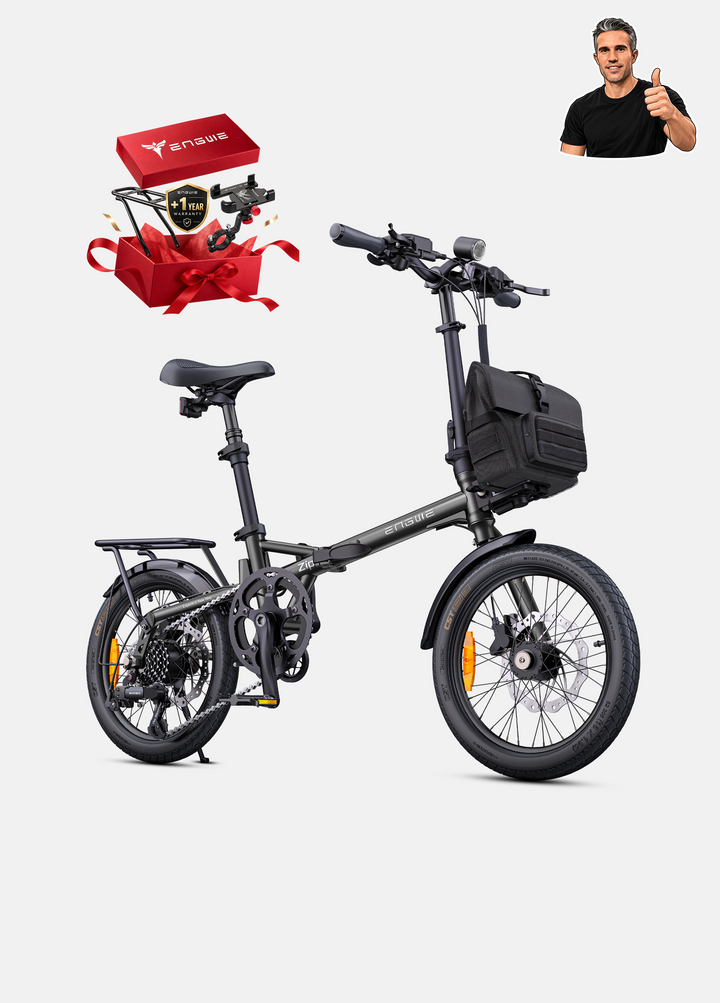
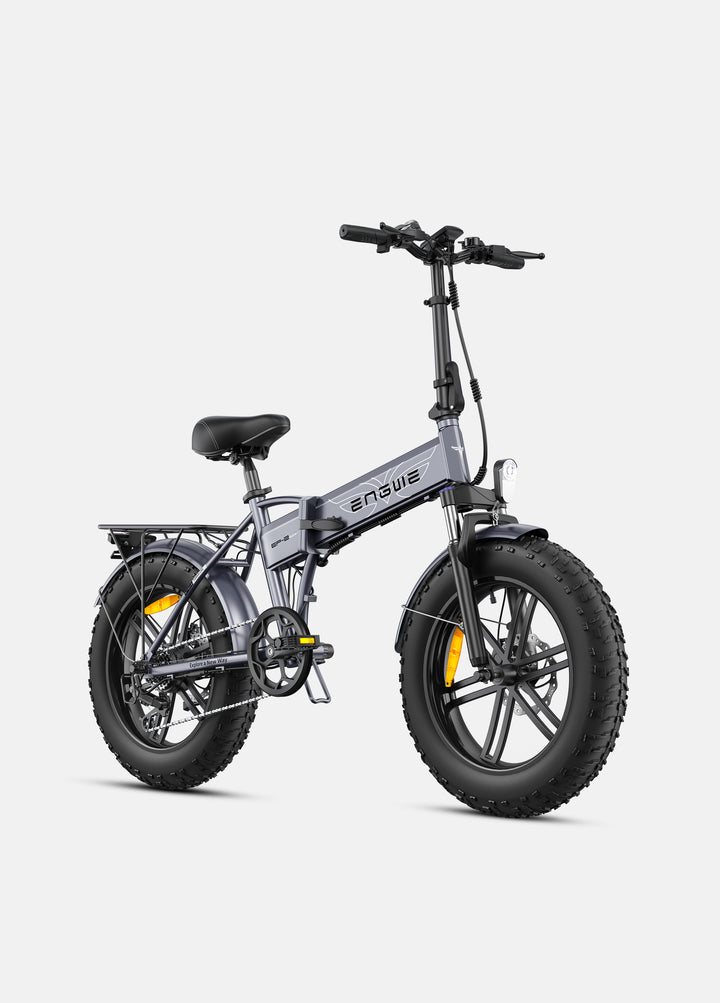
A best folding electric bike for motorhome or caravan travel must do more than fold. It should fit the available storage area, deliver enough usable range for day trips, remain comfortable on British roads and comply with UK electric bike rules. Battery removal, folded dimensions and suitable charging arrangements matter just as much as headline motor figures.
The right choice also depends on how the bicycle will travel. Some riders keep two electric bikes inside a motorhome garage, while others use a rear carrier or store one bicycle in a tow car. Narrow country lanes, campsite access roads, canal paths and coastal cycle routes each place different demands on tyres, gearing and suspension.
This guide compares ten folding electric bikes currently relevant to UK touring. Three ENGWE bicycles lead the recommendations because they cover distinct travel needs: long-range day rides, easy step-through access and comfortable riding across more varied surfaces.
How Did We Choose the Best Folding Electric Bike for Touring?
The best folding electric bike for touring must balance six practical factors: storage space, carrying weight, battery performance, ride comfort, road legality and dependable support. A high maximum range alone does not make a bicycle suitable for motorhome travel if its folded shape, charging system or riding position does not match the owner’s vehicle and routes.
Storage Space
A folding mechanism only provides real value when the folded bicycle fits through the storage opening and leaves room for luggage, levelling ramps, chairs and charging equipment. We therefore considered folded length, height and width rather than relying on broad claims such as “compact” or “portable”.
Folding pedals, rotating handlebars and removable batteries can also simplify storage. A bicycle with a tidy folded profile is less likely to catch on interior fittings or occupy unnecessary floor space.
Carrying Weight
Overall bicycle weight affects lifting, carrier compatibility and the motorhome’s available payload. The battery may account for several kilograms, so a removable design can make loading easier and keep the electrical system secure inside the vehicle.
Weight must always be assessed against the carrier’s total capacity and its maximum load per rail. A two-bike carrier rated for 60kg does not automatically support any two bicycles if each rail has a lower individual limit.
Range and Charging
We assessed battery capacity in watt-hours, published range figures, charger output and the ease of removing the battery. Watt-hours provide a more useful comparison than amp-hours alone because they account for both battery voltage and capacity.
Published maximum ranges normally use light assistance, controlled temperatures and favourable terrain. The best electric bike for long distance touring should still offer practical capacity when the rider uses stronger assistance, encounters hills or carries touring equipment.
Ride Comfort
Motorhome trips rarely stay on one perfect surface. British touring routes may include tarmac, patched lanes, compacted gravel, towpaths and uneven campsite entrances.
Tyre volume, suspension travel, frame geometry and torque-sensor response all influence comfort. Wider tyres and suspension can reduce vibration, while a well-calibrated torque sensor provides smoother assistance during low-speed manoeuvres and climbing.
UK Road Legality
A road-legal electrically assisted pedal cycle in Great Britain must have usable pedals, a continuously rated motor output no higher than 250W and electrical assistance that stops at 15.5mph. The bicycle must also display the required manufacturer and electrical information. Riders should confirm that they are purchasing the UK specification rather than a version intended for another market.
A compliant EAPC can generally be used like a conventional bicycle without registration, vehicle tax or compulsory motor insurance. Altering the assistance limit or using a non-compliant throttle can change its legal classification.
Warranty and Support
Touring places repeated demands on hinges, electrical connectors, brakes and batteries. Strong support therefore includes clear UK warranty terms, replacement parts, approved chargers and accessible technical guidance.
We also considered whether the manufacturer provides documented specifications rather than vague performance claims. Clear battery, braking and certification information helps buyers compare electric touring bikes on evidence rather than marketing language.
10 Best Folding E-Bikes for Motorhomes and Caravans
These ten bicycles suit different touring priorities, from compact internal storage to long-range day rides and comfortable exploration beyond the campsite. The three ENGWE recommendations cover the broadest combination of usable battery capacity, folding practicality and route capability for motorhome and caravan owners.
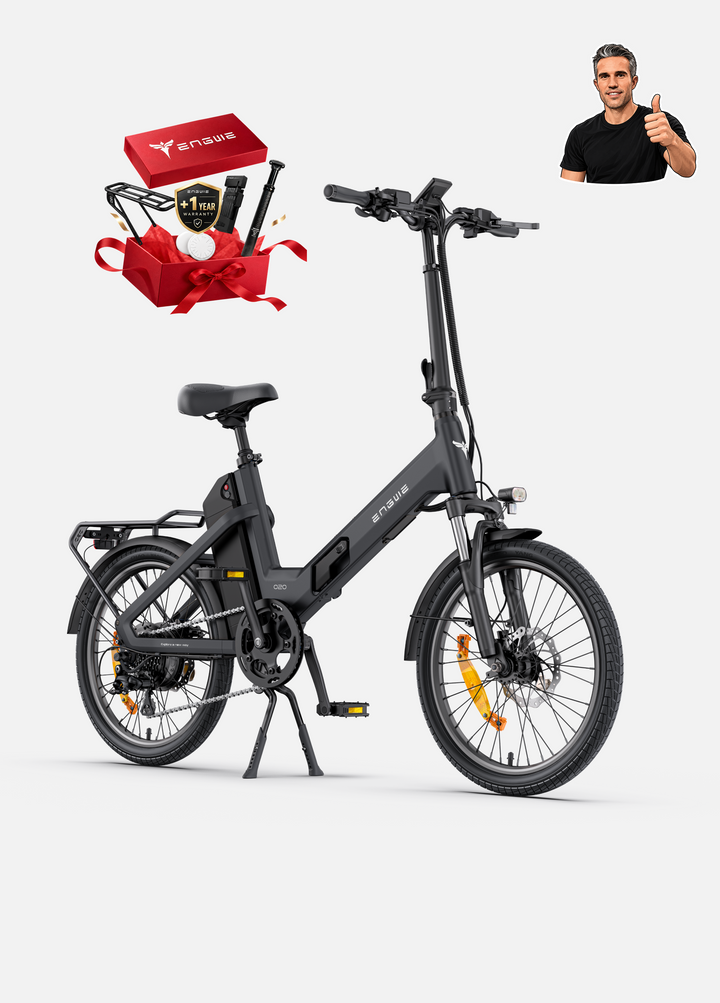
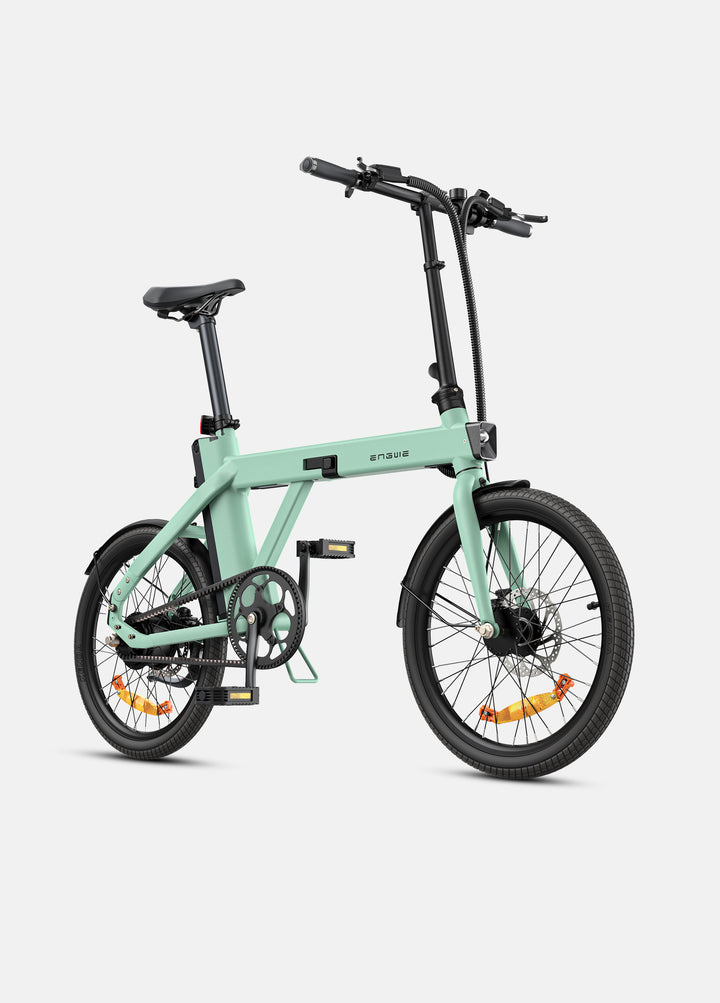
ENGWE O20 Boost: Best Long-Range All-Rounder
Core specifications: 250W rear hub motor, 75Nm torque, 720Wh removable battery, 26.5kg, 88 × 52.5 × 85cm folded, up to 141km tested range.
The ENGWE O20 Boost is the strongest all-round best folding electric bike recommendation for riders who want compact storage without reducing their touring ambitions. Its 720Wh LG battery delivers published real-world figures of 141km in PAS 1, 108km in PAS 3 and 80km in PAS 5, giving owners useful flexibility for village visits, coastal routes and extended rides from a rural campsite.
A torque sensor regulates assistance according to pedalling pressure, while the 75Nm motor supports controlled starts and climbing. The eight-speed Shimano Altus drivetrain gives riders more cadence control across rolling roads, and hydraulic disc brakes provide dependable stopping performance in changing British weather.
The 20 × 2.125-inch puncture-resistant tyres reduce rolling resistance, while the 50mm hydraulic front fork absorbs broken tarmac, kerbs and light gravel. Independent riding feedback also highlights its nimble handling and effective front suspension across urban bumps.
Folding pedals, a recessed frame hinge and an 88cm folded length make the O20 Boost particularly relevant to campervan and motorhome storage. Practical testing also identified its folding pedals and compact campervan footprint as useful travel features.
The UK specification uses a 250W motor and carries EN 15194 certification through TÜV. For many owners, it offers the most complete answer to the question of the best electric bike for motorhome touring, especially where long range, responsive assistance and manageable storage all matter.

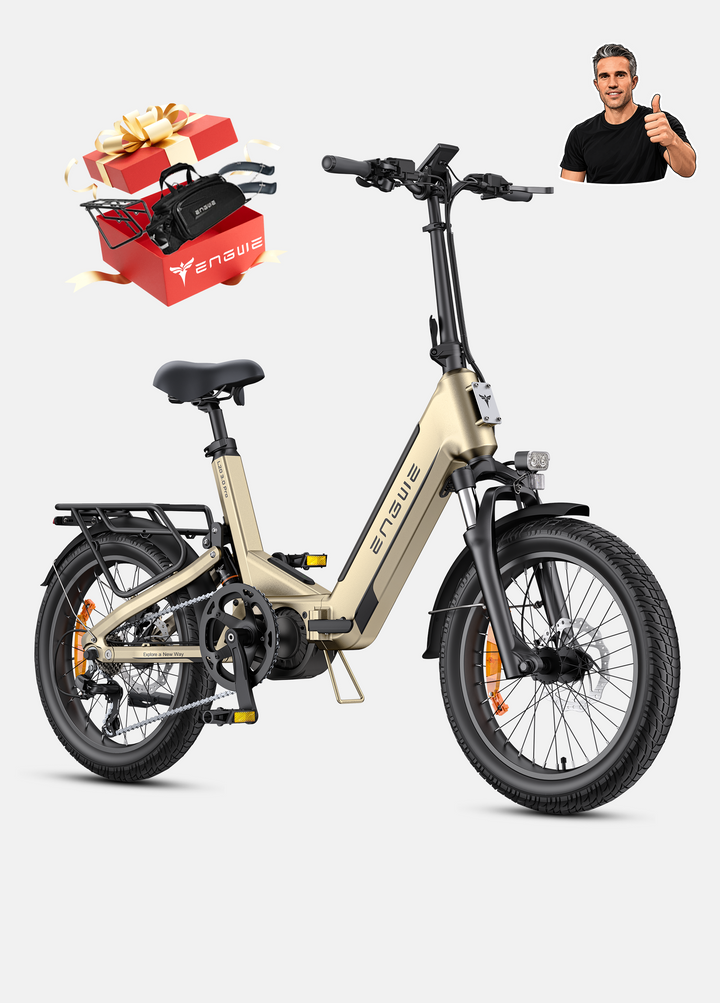
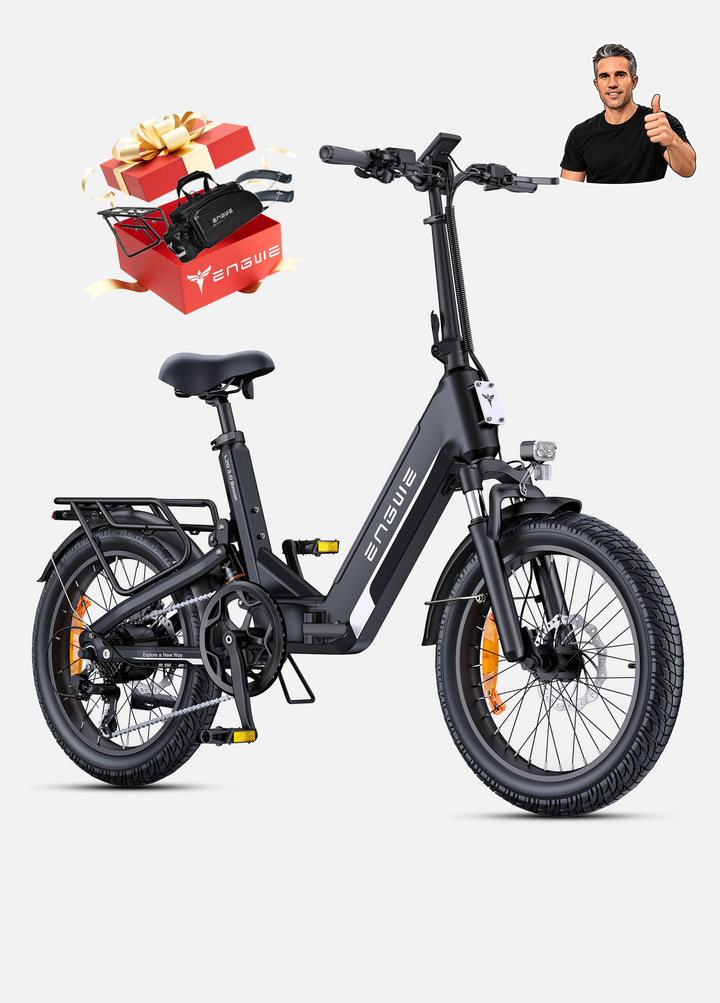
ENGWE L20 3.0 Boost: Best Step-Through Comfort
Core specifications: 250W rear hub motor, 75Nm torque, 648Wh battery, 33.2kg, 100 × 51 × 75cm folded, up to 120km real-world range.
The ENGWE L20 3.0 Boost centres its touring appeal on easy access and sustained comfort. Its low step-through frame allows riders to mount without lifting a leg high over the top tube, which is particularly convenient during frequent stops at shops, viewpoints and campsite facilities.
Full suspension combines a hydraulic front fork with 30mm of rear travel. The 20 × 3.0-inch puncture-protected tyres add grip and cushioning across uneven lanes, compacted tracks and rougher campsite surfaces. Hydraulic dual-piston brakes with 180mm rotors support controlled braking when the bicycle carries a rider and day-trip equipment.
A 648Wh battery provides published real-world ranges of 120km in PAS 1, 100km in PAS 3 and 85km in PAS 5. Its torque sensor delivers assistance in proportion to rider effort, creating a natural feel during slower manoeuvres and gradual climbs.
ENGWE also equips the bicycle with an 8A charger, a seven-speed drivetrain and a folding frame occupying no more than 0.3 cubic metres. The brand specifically positions it for car and recreational vehicle travel, making it a persuasive folding electric bike for riders who prioritise step-through accessibility, suspension and long-distance comfort. The UK configuration uses a 250W motor and conforms to EN 15194.

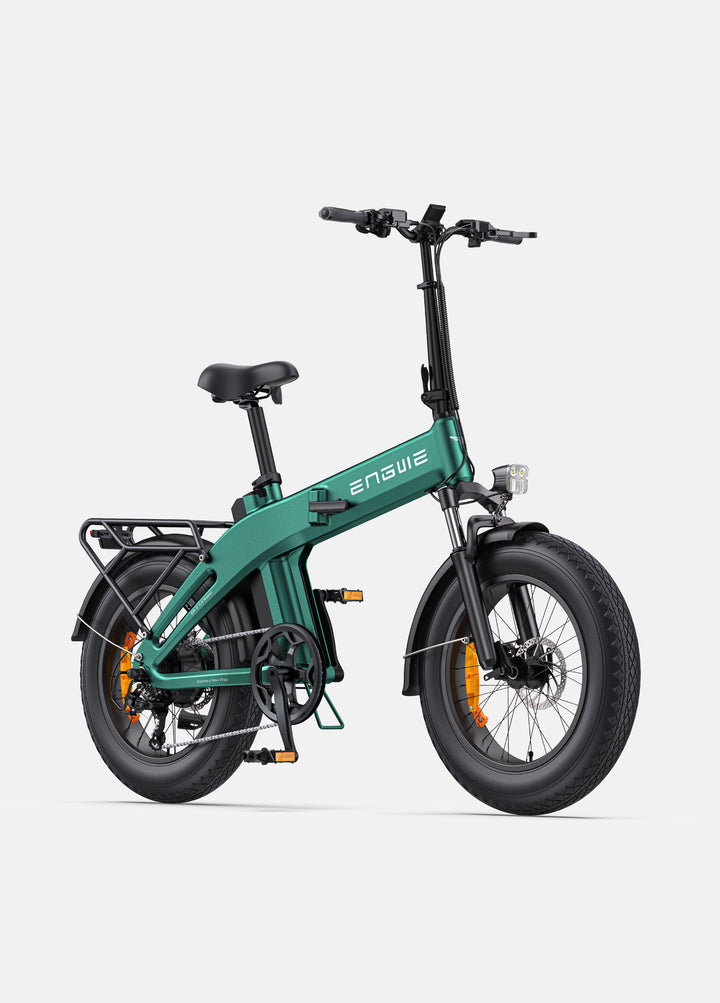
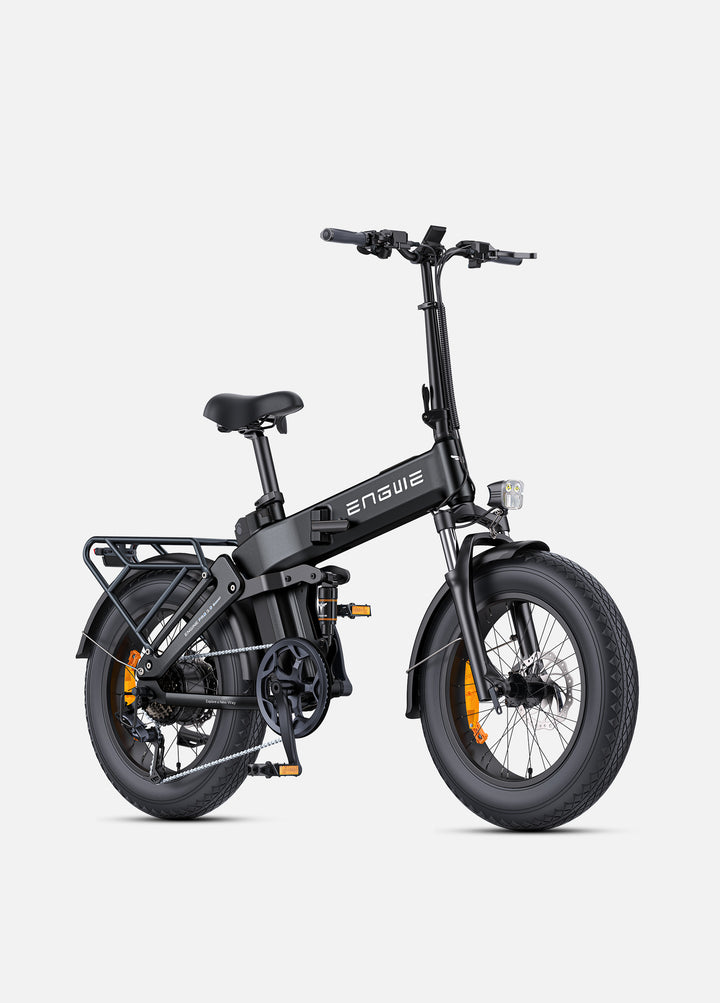
ENGWE Engine Pro 3.0 Boost: Best Rough-Route Comfort
Core specifications: 250W motor, 90Nm torque, 720Wh removable battery, 34.7kg, 97 × 53 × 81cm folded, up to 130km range.
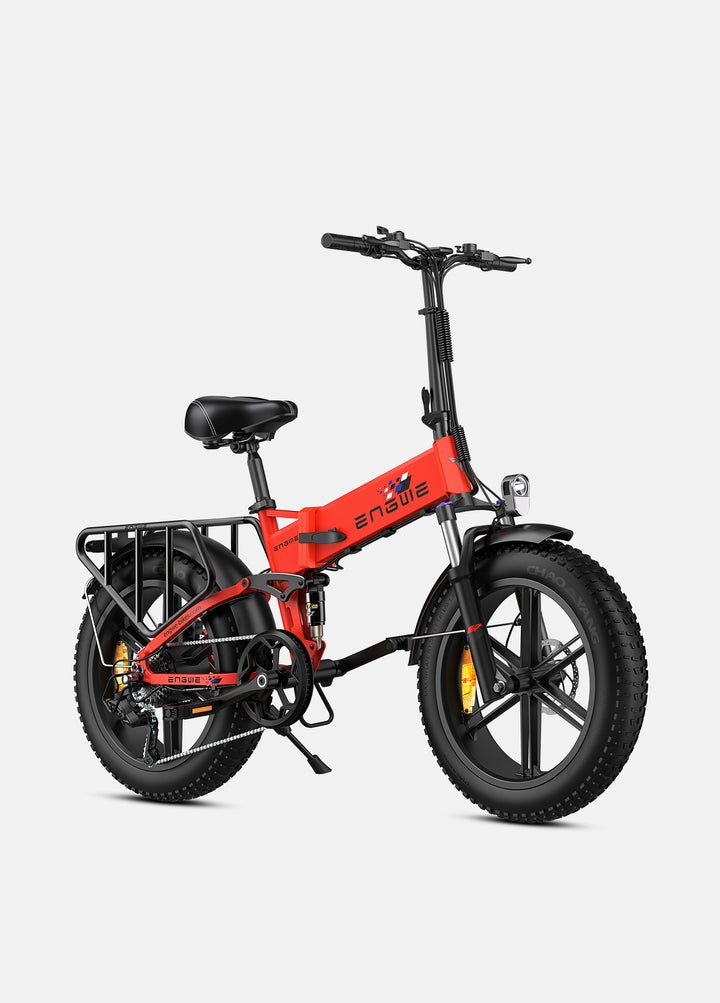
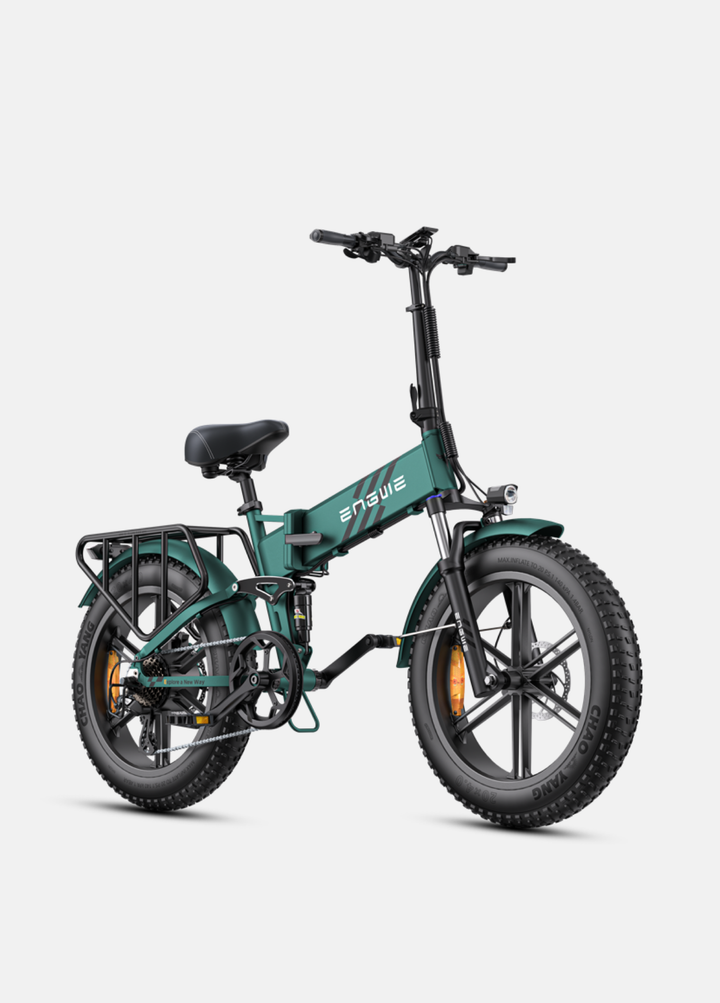
The ENGWE Engine Pro 3.0 Boost is designed for riders whose touring routes extend beyond smooth campsite roads. A 50mm front fork, 62mm rear suspension and 20 × 4.0-inch tyres create a stable platform across broken lanes, gravel tracks, forest approaches and uneven coastal routes.
Its 90Nm motor provides strong assistance during hill starts and loose-surface climbs. A torque sensor keeps power delivery responsive, while the seven-speed drivetrain gives the rider direct control over cadence. Dual-piston hydraulic brakes use 180mm rotors to support confident speed management on descents and wet roads.
The 720Wh battery supports published real-world distances of 130km in PAS 1, 108km in PAS 3 and 80km in PAS 5. Those figures make it a serious candidate for the best electric bike for long distance touring, particularly where the route includes varied surfaces rather than uninterrupted tarmac.
ENGWE builds the frame from magnesium alloy and integrates the removable battery into the structure. GPS, 4G and Bluetooth connectivity add app-based location and anti-theft functions, while over-the-air updates support the connected system.
The bicycle folds to 97 × 53 × 81cm and carries EN 15194 certification through TÜV. For owners seeking a robust best folding electric bike for country exploration, full suspension and substantial torque give the Engine Pro 3.0 Boost a distinctive touring role.

Brompton Electric G Line: Best Premium Adventure Folder
Core specifications: 20-inch wheels, 345Wh battery, four gears, hydraulic disc brakes, 19.5kg with battery, up to 90km range.
The Electric G Line brings Brompton’s compact folding approach to larger wheels and more adventurous riding. Its 20-inch tyres, hydraulic disc brakes and wider contact area suit paved lanes, towpaths, maintained gravel and everyday roads around a touring base.
A removable battery reduces the lifting weight from 19.5kg to 15.7kg. The folded bicycle can also roll on its supporting wheels, which helps owners move it through stations, ferry terminals and campsite buildings without carrying it continuously.
Three assistance modes allow riders to adjust battery use, and the published maximum range reaches 90km. The four-speed drivetrain keeps operation simple, although routes with repeated steep gradients require more careful gear and assistance management than flatter touring areas.
Brompton provides a seven-year frame warranty and a three-year electric system warranty when the bicycle is registered. It is a premium folding electric bike for owners who want refined folding engineering, manageable lifting weight and access to light adventure routes. UK buyers should verify the supplied EAPC configuration at purchase.
MiRiDER One: Best Lightweight Holiday Bike
Core specifications: 250W motor, 252Wh removable battery, 17.3kg, 77 × 43 × 68cm folded, 16-inch wheels, up to 45 miles claimed range.
The MiRiDER One focuses on easy handling and compact holiday transport. At 17.3kg, it is one of the lighter complete bicycles in this selection, while its 77cm folded length fits many car boots and smaller internal storage areas.
A 1.2kg removable battery can be charged away from the bicycle and stored inside the motorhome. The manufacturer states a maximum range of up to 45 miles under favourable conditions and lower assistance, which suits local sightseeing, shopping trips and shorter leisure routes.
Its single-speed drivetrain removes gear-selection complexity, and the small 16-inch wheels support responsive handling in town centres and around busy campsites. Riders planning hillier journeys should assess the route carefully because assistance level and gradient will have a greater influence on battery use.
For owners who place lifting convenience ahead of maximum battery capacity, the MiRiDER One is a practical best folding electric bike candidate for relaxed holiday riding.
Tern Vektron P5i: Best Bosch Touring Option
Core specifications: Bosch Performance motor, 75Nm torque, 400Wh or 545Wh battery, five internal gears, 23.6kg, 42 × 85 × 69cm folded.
The Tern Vektron P5i combines a folding frame with an established Bosch electrical system. The Performance motor delivers 75Nm, while battery configurations provide published ranges of up to 87km with 400Wh or 120km with 545Wh.
A Gates carbon belt and Shimano Nexus five-speed internal hub create a low-maintenance transmission with a 263% gear range. This arrangement keeps the drivetrain clean inside a vehicle and allows the rider to change gear while stationary before restarting on a gradient.
The bicycle folds in about ten seconds and measures 42 × 85 × 69cm when packed. Its Atlas V rear rack carries up to 27kg, supporting practical luggage use after the motorhome has been parked.
Hydraulic disc brakes, adjustable rider fit and EN 15194 compliance strengthen its touring credentials. The Vektron P5i suits buyers seeking a folding electric bike built around Bosch support, belt-drive cleanliness and regular surfaced-road touring. UK specification and battery configuration should be confirmed with the supplying dealer.
Gocycle G4i: Best Premium Fast-Folding Design
Core specifications: 17.1kg, 20 × 2.25-inch tyres, three-speed automatic shifting, hydraulic disc brakes, up to 80km range, approximately 10-second fold.
The Gocycle G4i packages its drivetrain, cabling and suspension into a clean, transport-friendly structure. Its carbon central frame contributes to a complete weight of 17.1kg, while the folded bicycle can be rolled rather than carried across every indoor space.
A 10-second folding process suits travellers who frequently combine cycling with cars, trains or ferries. With the kickstand lowered, the published folded dimensions are 830 × 370 × 750mm; an alternative lower configuration is available with the stand raised and removable pedal detached.
The three-speed predictive shifting system selects gears automatically, and hydraulic disc brakes provide consistent control. A 25mm rear suspension system and 20 × 2.25-inch tyres improve comfort on paved routes and ordinary road imperfections.
The battery offers up to 80km of claimed range and uses a 4A charger with a stated 3.5-hour charging time. Gocycle recommends a maximum combined rider, clothing and luggage load of 100kg and designs the G4i primarily for paved roads. It suits touring owners seeking an elegant, fast-folding electric touring bike for towns and surfaced leisure routes.
Fiido X: Best Sleek Long-Range Commuter
Core specifications: 250W motor, 417.6Wh removable battery, torque sensor, seven speeds, hydraulic brakes, 19.8kg, up to 130km tested range.
The Fiido X uses a streamlined magnesium-alloy frame and stores its removable battery inside the seatpost. This arrangement keeps the central frame visually clean and allows the battery to be taken indoors for charging.
A torque sensor provides assistance according to rider input, while the seven-speed drivetrain expands the usable cadence range for rolling roads. Tektro hydraulic brakes and 20 × 1.95-inch tyres suit paved touring routes, towns and cycle paths.
Fiido publishes a maximum test distance of 130km in Eco mode, with shorter figures recorded in Normal and Sport modes. Those tests used a 75kg rider on flat ground at approximately 32°C, so British temperatures, hills and wind will alter the result.
The folded dimensions are approximately 870 × 400 × 740mm, and the stated payload is 120kg. The Fiido X works well as a sleek folding electric bike for riders who want commuter-style handling and a sizeable published range.
ADO Air 20 Ultra: Best Automatic Belt-Drive Folder
Core specifications: 250W motor, 50Nm torque, 370Wh battery, automatic three-speed hub, carbon belt, hydraulic brakes, 22kg, up to 100km range.
The 2026 ADO Air 20 Ultra combines automatic shifting with a carbon belt drive. Its Bafang H730 system selects between three gears, reducing the need for manual changes during stop-start riding through towns or campsite roads.
A dual-sided torque sensor measures rider input, while a lockable front suspension fork and 20 × 2.0-inch reflective tyres support daily comfort. Tektro hydraulic brakes, integrated lighting and IPX6 water resistance add practical equipment for changeable conditions.
The 370Wh battery provides a published maximum range of 100km and requires approximately four to six hours to recharge. An MIK-compatible rear rack also allows suitable touring bags or baskets to be fitted.
This best folding electric bike contender suits riders attracted to clean belt-drive operation and automatic gearing. UK buyers should confirm domestic delivery, warranty support and the exact EAPC software configuration before ordering, as published specifications can differ between markets.
Brompton Electric C Line: Best Compact Storage
Core specifications: From 17.3kg, 13.8kg without battery, four gears, removable battery, up to 90km range, steel folding frame.
The Electric C Line remains one of the strongest choices where folded volume is the primary buying condition. Its established folding sequence produces a compact package that can be rolled through stations, stored inside a vehicle or positioned beneath other touring equipment.
Removing the battery reduces the lifting weight to 13.8kg. The e-Motiq assistance system offers a published maximum range of 90km, while four gears cover routine urban riding and relatively gentle leisure routes.
The steel frame carries a seven-year warranty after registration, and the electric system receives three years of cover. Brompton’s dealer network also provides a clear route for servicing and compatible accessories.
For a small motorhome, tow car or caravan with tightly restricted storage, the Electric C Line is a credible best folding electric bike for compactness and mixed-transport travel. Buyers should confirm that their chosen UK version carries the required EAPC markings.
What Folding Size Works Best in a Motorhome?
The right folded size is the one that passes through the storage opening, fits securely within the available floor area and leaves enough room for other essential equipment. Motorhome owners should measure the complete storage route rather than checking only the internal compartment, because doors, steps, handles and tight turning angles often determine whether a bicycle fits.
Measure the Storage Bay
Measure the clear opening width and height first. Then record the internal depth, floor width and any obstruction caused by shelves, heating equipment, spare wheels or pipework.
The bicycle must also be manoeuvred into position. Add enough clearance to rotate or tilt the folded frame without scraping cabinetry or electrical fittings.
Folded Length, Width, and Height
All three folded dimensions matter. A short bicycle may still be too tall for a low locker, while narrow storage can be blocked by fixed pedals or handlebars.
Compare manufacturers’ figures using the same orientation. Check whether quoted measurements require the saddle to be lowered, the pedals folded or a component removed.
One Bike or Two
Two bicycles rarely occupy exactly twice the floor area because handlebars, racks and wheels may overlap. Test the proposed arrangement with cardboard templates or marked floor dimensions before buying.
Allow separate space for batteries, chargers, helmets, locks and protective covers. Couples seeking the best electric bike for motorhome use should calculate the complete touring setup rather than the bicycles alone.
Removing Batteries Before Lifting
A removable battery can reduce lifting weight and prevent the battery from being exposed to vibration or prolonged cold during travel. Carry it using the designated handle or protective case rather than by its connector.
Store the battery where it cannot move during braking. Keep the terminals dry and protect them from loose metal objects.
Protecting Interior Surfaces
Use a washable floor mat beneath the bicycles and fit wheel covers after wet rides. Soft frame sleeves can prevent two folded bicycles from rubbing against each other.
Secure the frames to fixed load points with suitable straps. Do not rely on the folding hinge or brake levers as tie-down locations.
How Much Weight Can Your Motorhome or Rack Carry?
The safe carrying limit depends on the bicycle weight, carrier rating, vehicle payload and individual axle limits. Motorhome owners must check all four values because a carrier can remain below its headline capacity while the fully loaded vehicle or rear axle exceeds the manufacturer’s permitted weight.
Bike Weight Without Battery
Record the bicycle’s complete ready-to-ride weight and its weight after removing the battery. Include racks, baskets, locks and any permanently fitted accessories.
A quoted catalogue weight may exclude optional equipment. Weighing the finished touring bicycle provides the most reliable figure for loading calculations.
Rear Carrier Load Limits
Check both the total carrier capacity and the permitted weight for each rail. Confirm that the wheel channels accept the bicycle’s tyre width and wheelbase.
The mounting system must also be approved for the vehicle or towbar. Follow the carrier manufacturer’s instructions for clamps, straps and bicycle spacing.
Motorhome Payload Checks
A vehicle’s maximum authorised mass includes the motorhome, passengers, fuel, water, luggage and carried bicycles. The permitted figure appears on the manufacturer’s plate and in the vehicle documentation.
Calculate the remaining payload after loading the vehicle for a normal trip. Water tanks, gas cylinders, leisure batteries, awnings and personal equipment can use a substantial proportion before the bicycles are added.
Rear Axle Load
Rear-mounted bicycles place weight behind the axle, which can increase rear axle loading through leverage. Check the separate front and rear axle limits shown on the vehicle plate, not only the total authorised mass.
The Caravan and Motorhome Club also advises owners to consider both available payload and rear axle loading when carrying electric bikes.
Safe Lifting and Loading
Load bicycles with two people where practical, particularly when the carrier sits high above the ground. A carrier with a loading ramp can reduce awkward lifting and protect both the rider and vehicle.
Remove batteries and unsecured accessories before loading. After fastening the bicycles, check that lights, number plates and indicators remain visible. The Highway Code requires loads to remain secure and vehicles not to exceed their permitted weight.
Battery Range, Charging, and Campsite Use
Battery planning should reflect the route, assistance level, weather and available charging time. The best folding electric bike for touring provides enough usable capacity for the intended ride without depending on an ideal laboratory range, while a removable battery makes campsite charging and secure indoor storage easier.
Battery Capacity in Wh
Watt-hours indicate the total nominal energy stored in a battery. Calculate the figure by multiplying voltage by amp-hours when the manufacturer does not display it directly.
A 48V 15Ah battery, for example, stores 720Wh nominally. That does not guarantee a fixed distance, but it offers a sound basis for comparing battery sizes.
Official Range vs Real Range
Maximum range figures usually reflect low assistance, moderate speed, a lighter rider and favourable conditions. Higher assistance, steep climbs, soft tyres, luggage and repeated starts increase energy consumption.
Look for brands that publish more than one range figure. PAS-specific or test-condition data gives a clearer picture than a single maximum number.
Charging at Campsites
Ask the campsite whether electric bike charging is permitted and where it should take place. Use a dry, ventilated area with a suitable mains outlet and keep the charger away from combustible materials.
Only use the charger supplied or authorised by the manufacturer. Do not charge a battery across an escape route, leave it charging while asleep or cover the charger during operation.
Charging From a Motorhome
Charging through an inverter requires more than matching the plug shape. The inverter must support the charger’s continuous input, and the leisure battery must contain enough usable energy after conversion losses.
A 720Wh e-bike battery cannot be refilled from a small leisure battery without materially reducing the energy available for lighting, refrigeration or other equipment. Use the charger’s input label and the leisure system’s usable capacity for the calculation.
Cold-Weather Range Loss
Low temperatures slow electrochemical activity and can reduce the energy available during a ride. Headwinds, wet roads and heavier clothing may further increase demand in British winter conditions.
Store the battery in a dry, moderate indoor temperature where possible. Allow a cold battery to reach a suitable temperature before charging and follow the manufacturer’s stated operating limits.
Spare Battery Planning
A spare battery can support longer day rides where charging points are uncertain. It should match the bicycle’s approved voltage, connector, battery management system and mounting arrangement.
Carry it securely in a padded position and protect its contacts. A second unapproved battery is not a safe substitute for route planning or manufacturer-approved equipment.
Storage, Security, and Battery Care on Tour
Good touring practice protects the bicycle, the vehicle and the battery between rides. Secure mounting, approved charging equipment, moisture control and basic pre-ride checks help a folding electric bike remain reliable through repeated journeys, changing weather and long periods inside a motorhome or caravan.
Indoor Motorhome Storage
Fold the bicycle according to the manufacturer’s sequence and confirm that every latch has closed correctly. Position it where it cannot obstruct an exit, access panel or emergency equipment.
Use fixed vehicle anchor points and tensioned straps. Recheck the load after the first few miles because tyres and padded frame covers may settle during travel.
External Rack Security
Lock the bicycle to the carrier and secure the carrier to the vehicle. A second independent lock creates another barrier during overnight stops.
Remove batteries, displays and easily detached accessories where the design allows. Keep key numbers, serial numbers and photographs in a separate record.
Safe Battery Charging
Inspect the casing, cable and connector before each charge. Stop using a battery that shows swelling, impact damage, unusual heat, leaking or a persistent chemical smell.
Let the battery cool after an intensive ride before connecting it. Unplug it after charging finishes and avoid overloaded extension leads or improvised adaptors.
Damp and Condensation
Wet bicycles should dry before long-term enclosed storage. Wipe the frame, folding joints and electrical contacts, then leave enough ventilation for trapped moisture to escape.
Condensation can form when a cold bicycle enters a warm motorhome. Keep batteries and chargers away from damp floors, direct heat and unventilated lockers.
Pre-Ride Safety Checks
A brief inspection should cover the folding hinges, handlebar stem, wheel attachment, tyre pressure, brakes and battery lock. Confirm that luggage remains secure and cannot enter the wheels.
Switch on the lights, test the brakes at low speed and check that electrical assistance stops at the UK limit. These checks take only a few minutes and support safer, more predictable touring.
FAQ
Should I choose the ENGWE L20 3.0 Boost or Engine Pro 3.0 Boost for uneven routes?
Should I choose the ENGWE L20 3.0 Boost or Engine Pro 3.0 Boost for uneven routes?
Choose the ENGWE L20 3.0 Boost for low step-through access, 20 × 3.0-inch tyres and full-suspension comfort on country lanes and maintained tracks. Choose the Engine Pro 3.0 Boost for 90Nm torque, 20 × 4.0-inch tyres and 62mm rear suspension when your touring routes include more gravel, grass or uneven rural surfaces.
How much motorhome storage space do the O20 Boost and L20 3.0 Boost need?
How much motorhome storage space do the O20 Boost and L20 3.0 Boost need?
The ENGWE O20 Boost folds to 88 × 52.5 × 85cm, while the L20 3.0 Boost folds to 100 × 51 × 75cm. Measure the locker entrance as well as the internal floor area, because the bicycle must pass through the opening. The O20 Boost also includes folding pedals, which help create a tidier profile inside a motorhome garage or tow car.
Which ENGWE folding electric bike offers the easiest mounting for frequent stops?
Which ENGWE folding electric bike offers the easiest mounting for frequent stops?
The ENGWE L20 3.0 Boost is the clearest choice for riders who regularly stop at shops, viewpoints and campsite facilities. Its step-through frame reduces the height riders must lift a leg over, while the torque sensor delivers controlled assistance when restarting. Full suspension, 20 × 3.0-inch tyres and a 648Wh removable battery support comfortable day trips from a caravan or motorhome.
Which ENGWE combination works well for two people travelling by motorhome?
Which ENGWE combination works well for two people travelling by motorhome?
Two ENGWE O20 Boost e-bikes suit couples who prioritise compact folding dimensions, long published range and responsive road riding. Another practical pairing is the O20 Boost with the L20 3.0 Boost, giving one rider the O20’s streamlined touring design and the other the L20’s low step-through frame and full suspension. Always confirm the vehicle payload, storage dimensions and carrier capacity before ordering.